Season 2 | Episode 11
What Happens After Life Changes Everything | Part 1 with Chrissy Symeonakis
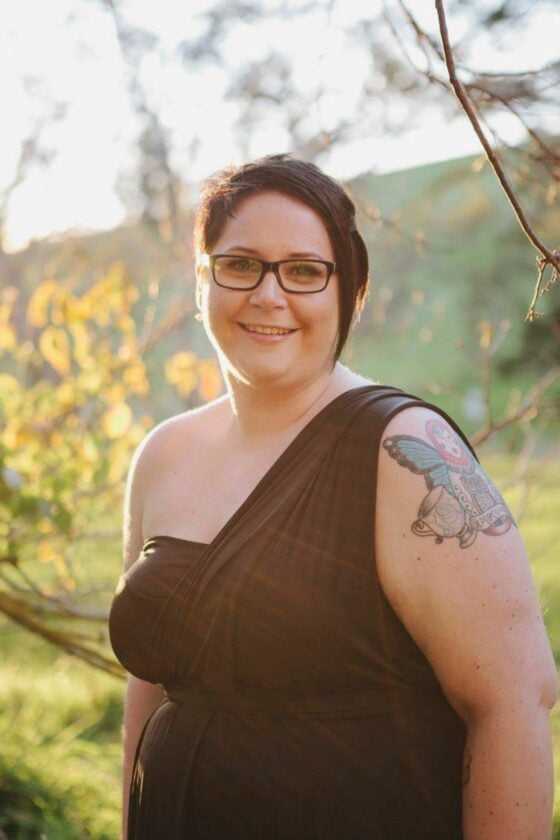
Chrissy Symeonakis
Chrissy Symeonakis is a business owner, mentor, and advocate whose life changed after being diagnosed with Multiple Sclerosis at 30. Living with permanent disability and blindness in one eye, she has spent the last 13 years building businesses, supporting others with chronic illness and disability, and speaking openly about resilience, therapy, community, and reclaiming power.
Show Notes
In Part 1 of this 2-part episode of Different Like You, we dive into Chrissy Symeonakis’ story, from regional South Australia to building a life shaped by grit, health challenges, culture, and deep care for other humans. You’ll hear a real conversation about chronic illness, grief, identity, community, and what it means to keep going when life has already hit hard.
Chrissy shares her experience of being diagnosed with Multiple Sclerosis at 30, becoming permanently disabled, losing vision in one eye, and navigating the kind of systems that do not always know how to treat people with dignity. We talk about the weight of being pushed out, misunderstood, and underestimated, and the strength it takes to rebuild anyway. We also get into culture, kindness, and the role her Greek heritage has played in shaping her values, her work, and the way she moves through the world.
Highlights:
- Chrissy’s journey from regional South Australia to nurse, researcher, advocate, and business owner
- Living with MS, disability, and the reality of being forced to adapt fast
- How Greek culture, values, and community shaped the way she sees care and connection
- The impact of grief, trauma, and systems that fail people when they most need support
This part of the conversation is honest, tender, and strong without trying too hard to be any of those things. It is about survival, yes, but also about identity. About what happens when life breaks the picture you had in mind, and you build something more honest in its place.
🎧 Tune in now, and if it lands, share it with a mate.
Because everyone is different, just like you.
There is a lot in this one for anyone living with chronic illness, carrying grief, or trying to hold onto themselves while life keeps shifting. Chrissy’s story is a reminder that people are often carrying far more than what the outside world can see.
Guest bio
Chrissy Symeonakis is a business owner, mentor, and advocate whose life changed after being diagnosed with Multiple Sclerosis at 30. Living with permanent disability and blindness in one eye, she has spent the last 13 years building businesses, supporting others with chronic illness and disability, and speaking openly about resilience, therapy, community, and reclaiming power.
Guest links
Website: www.chrissysymeonakis.com
Website: www.creativelittlesoul.com.au
Instagram: https://www.instagram.com/creativelsoul/ and https://www.instagram.com/chrissy_sym/
🔗 LINKS
Website: https://shantellepoynter.com
Instagram: https://www.instagram.com/shantellepoynter/
Transcript
SHANTELLE (00:01):
This podcast wasn't born in a studio. It was built in the wild moments of real life, the messy and the beautiful ones. School drop-offs, cold coffee, and whispered pep talks to myself that maybe just maybe there's more to life than only surviving. I'm Chantel, nurse, neurodivergent woman, solo mum, and your platform, Glitter Crocwearing Healthcare Hype Girl. I'm driven by one purpose. To show the world that different doesn't mean less because everyone is different, just like you. The more we talk about being considerate of all humans, not just in response to a diagnosis, the more it becomes part of everyday life. So welcome to Different Like You, where we have real considered conversations about inclusion, kindness, and what it means to be fully human. If something here resonates, share it with a friend because these conversations change the world. One listener at a time. Let's get into it.
(01:03):
Through the work that I have done in my nursing life, but there are many moons before that, it became really evident to me that people see difference as a negative. And that has always surprised me because everybody is different. And being unique isn't special because everyone is unique. So with that kind of understanding of our social narrative, I wanted to talk about it. I wanted to talk to people that had the same view. And I feel like I've created through the podcast what I call the constellation of considered humans, where we all are so different. We shine bright in most beautiful ways, and we have that same view of different doesn't mean less, everyone's different. And when we have kind conversations about the human experience, it's okay if we don't agree because we talk to understand, not to be right. So that's a bit of who I am.
(02:12):
And my passion is if the world can make considerations for all people instead of adjustments in response to a diagnosis. I wonder what would happen.
CHRISSY (02:23):
Yeah, that's amazing. And that's such a cool narrative.
SHANTELLE (02:27):
So what appealed to you about coming on the podcast?
CHRISSY (02:32):
I loved your nursing background, and I also love your mission and your ethos. And I listened to your episodes and I love the energy that come through. And I just felt ... I do lots of different podcasts and I'm a marketer myself and stuff like that. But even now talking to you, you have a radiance about you. It's a really beautiful energy. Thank you. So yeah, I just loved the conversations that you were having and it felt aligned. And I was like, "This chick seems really cool. I want to be friends with
SHANTELLE (03:08):
Her." Welcome where best is. I knew from when I was reading the information that came through and I was like, I felt exactly the same. I was like, "Yes, come on in. You are in the constellation. You are one of us."
CHRISSY (03:22):
Yeah. No, I just felt real and that genuine, really being genuine and having an ethos of kindness, conversation. If we don't have these conversations, things don't change. And then there are a lot of people that don't have a voice to share their
SHANTELLE (03:41):
Story.
CHRISSY (03:42):
So by us sharing our stories, somebody might take something away for that. They might be empowered to then take a step to do something in their life. So yeah, that's kind of what I see as being important.
SHANTELLE (03:54):
That's amazing. And I do too. And sometimes I feel like with my diagnosis of autism and ADHD, I am so grateful that my ADHD is like, "Yes, let's exercise our free will and start a podcast even though you have no idea what you're doing. Let's just jump on in because there are other people who are experiencing this and they might not know. I have a little bit of information about how to start a podcast or I'm crazy enough to spend the time to figure it out. " But some people don't have access to that. And I feel the same. We need to be having these conversations to represent the difference that is in our world and that it's okay to not agree with somebody's opinion. That is okay. But if we're kind and we're curious and we're open to learning about their experience, it changes the discussion from maybe a negative experience and turns it into how can we do this different is my belief.
(05:06):
I didn't realize how much I'm very happy to do a deep dive into research until I came to nursing. And this has actually underpinned research that I'm doing. And what I was talking about before with the being kind, being curious, being open to learning is a framework that I've developed to sit across health education and organizations. So when we take their values and their missions, whatever they are, they'll all be different, but apply that, we are then starting to operate in a world where we recognize a person first and not their position or their outcome. So enough about me though, because that's boring. I know that story really well. I would love to hear, and I am sure there are so many people out there that want to hear who is Chrissy and what do you do and how did you get there?
CHRISSY (06:06):
Yeah, cool. So I come from regional South Australia, so I grew up in a really small country town. I grew up with migrant parents and grandparents. So my dad's side are from Greece. I had the most beautiful grandparents who just loved us and looked after us. We were taught a pretty strong work ethic from a young age, helping out on the farm, helping our parents. I found growing up regionally was a little bit hard, especially as somebody who's so creative and eccentric. I would often be people thought I was a troublemaker or I was an outcast and I kind of just sat on different fringe groups. But from a young age, I love to write. I was really creative and that was fostered by my aunt. She worked at the council. She was a community services manager and she put me into youth week committees and on the local council was a youth mayor and posted events.
(07:04):
And then they had a funding for a youth newspaper. So it was for youth ages 12 to 25. And I was the editor, but then I went and got some training to do some writing and editing. And then I went into a journalism career. And that was kind of like my way out of the country as well. I was able to move to a big city, study, work. And my family background as well is hospitality. So my dad's been a chef and still is. My brother's a chef. My husband's a chef. And so I kind of worked in hospo and then went into nightclubs, had a really great career. About 13 years ago, this month actually, I was diagnosed with multiple sclerosis. So had these headaches, wasn't feeling great, would always bump into things, fall over. And then one morning I woke up and had a shower and I couldn't see anything out of my right eye.
(07:56):
It was like a snowstorm. So immediately they're like, "Maybe you're having a stroke or something's going on. " Went to the ophthalmologist. She looked into my eye and she says, "Oh, you've got MS really nonchalantly." And I'm like, "What do you mean? How do you even know this? " But obviously my optic nerve had demyelinated and that was a permanent issue. At the time, my workplace were really non-supportive. I was working 80 hours a week. I was basically making these guys millions of dollars, but asking for time off or having some flexibility to work from home or go to a doctor's appointment. It was just not okay with them. So I was eventually bullied and pushed out of the business. It was a really toxic culture and just not nice. So all I had was two weeks of annual leave and I quit my job and went and started my own little marketing agency.
SHANTELLE (08:51):
Incredible. What a story. I'm so sorry that that was your health experience as well because I do feel like because as clinicians, we see so many wild things that are so devastating for people every day. Our exposure is so much greater than what people who don't work in the industry are. And it is easy to forget that just because it is normal for us, it is quite possibly the most significant day in someone else's life.
CHRISSY (09:30):
Yeah. And that day, I know it's the 27th of February. I know that's my anniversary and I had a pretty terrible time. For a decade, I went through seven different medications to try and help halt the disease progression. I had one medication give me skin cancer as a side effect. I had another medication make me a type two diabetic because of the side effects that had to then get reported to the TGA and then all this other stuff. I have to have monitoring done. But I feel like I'm in a good spot right now. I'm on a really great medication. I've got a really good neurologist and I had a big grief cycle the past two years with both grandparents passing away within 12 months of each other. Thank you. And yeah, I felt like I was treading water. I felt like every day was hard.
(10:24):
I wasn't in love with my business. I wasn't enjoying things. It was just hard work. And I think when you're going through grief as well, there are expectations for you to just get over it or the funeral has been move on, but you've had a lifetime of a relationship with somebody and I would call my grandma every Sunday. And so even now, it's been two years, I still reached for the phone to call her. It's just such a pattern that's ingrained in us.
SHANTELLE (10:55):
I spoke to Marie last week and her episode will be coming out and she is a grief counselor among other things. And we spoke a lot about our culture and how we manage grief and our connection to culture and why it is the way it is and how other cultures grieve and the differences. And long story short, it really comes down to the finite point and we don't celebrate that person and we flip straight to, "This is the most awful thing that's ever happened to you. Here's two days to grieve some flowers and then we're not going to talk about it anymore because we're a bit scared of what will happen." And it was really interesting to talk to her about that. And from a nursing perspective, there is not a single person that says, "Oh, I wish I worked more when they're in that palliative stage," or, "I wish I spent five more hours in the office working on that brief." So if we take that knowledge that we have and we then apply it to celebrating people and talking about them, and those memories are still there.
(12:26):
And when we think about the happy memories, even if the person's not there or the situation, maybe if it's not grief related to death, we still experience that joy again.
CHRISSY (12:36):
Yeah, for sure.
SHANTELLE (12:38):
And I feel like a lot of people have fear around grief because they feel guilty. And if we lead with the celebration, we kind of remove that guilt because we can't change any of that. Hey.
CHRISSY (12:58):
Yeah. One thing I've been trying to do is our grandmother was the matriarch of our family and was such a great cook and she taught my brothers to cook and I learnt. So what I'm trying to do, I have nieces and nephews that are like 10, eight, and five. So what I'm trying to do now is trying to fill that role in continuing our Greek culture. So I'm actually making her recipes and putting them into a book. And then at Christmas this year, I'll give everybody a copy of the book, which are all of her recipes. So then we can continue her legacy and her memory and sharing and passing on that love and nurturing type experience.
SHANTELLE (13:39):
That's so amazing because all of those beautiful things that you did with her, the feelings that you've had through that, they don't have to stop. And how incredibly lucky your nieces are that you have taken the time and effort to process, as you say, two years, and it is a cycle and it shows up differently in every day, I would imagine. And to be able to turn that into the most beautiful thing and create those special moments with those kids that are so deserving of that part of grandma as well, "Sign me up. I want the book. I will buy the book." That's beautiful and so meaningful when we put things out in the world, if we're passionate about them, if they're meaningful, they just carry so much beauty-
CHRISSY (14:35):
Yeah, absolutely. ...
SHANTELLE (14:36):
Through how they're experienced. I'm curious to know, through your MS journey, if you feel comfortable talking about it, what do you think would've been helpful to have been done differently?
CHRISSY (14:54):
Yeah, that's a really good question. I think giving you ... When you get diagnosed, in my case, it's all super overwhelming. There's a lot of fear behind it. I feel like having resources for your family to understand what it would be like and the best ways that they can support you, like a little guidebook, because my grandmother didn't understand and I was lucky to be a consultant with MS Australia and I had said to them, "It would be really good if you could put fact sheets in different languages for different cultures because Australia is such a multicultural place." So they're like, "Okay, cool." So they did a Turkish one, Greek, some Vietnamese, lots of different languages. And then I remember taking that booklet to my grandmother and she's like, "Ah, okay, now I understand." So I feel like just helping people, providing them with resources and things to expect, they don't really tell you symptoms of relapse could be incontinence, spow incontinence, can be loss of vision, fatigue.
(16:11):
And there's still this old school messaging and mentality around MS. It's not a death sentence. You're not necessarily going to end up in a wheelchair. But I remember the doctor, the first neurologist I had, which was the one that diagnosed me, he just said to me, "If you don't change your lifestyle, you're going to be in a wheelchair in three years." Well, buddy, it's been 13 years. I'll use a walking stick because I need that for my depth perception and mobility, but the medication out there now is so great. I'm in a remitting stage now, but that was hard work to get there. And I think as well, families, partners, we're angry. Once you get a diagnosis, you're going through a grief cycle as well because you're grieving the life that you had and the life that you think you might have, but there are great things.
(17:05):
I never would've started my own business. I never would've grown that to have 10 people that work for me. I never would have that freedom and flexibility to take time off when I want. But yeah, really look at the resources and be angry. If we're angry, like I always say to my husband,
(17:22):
If I'm angry about it, just say to me, "Yeah, that is shit," or, "That is terrible." Or, "Be mad with me. Don't say to me, Oh, it'll be fine. You'll feel better later. We don't need that information. And sometimes we don't even need you to say anything. We just want you to be validating our feelings and then it'll pass. It'll pass.
SHANTELLE (17:44):
Just give us the space to feel how we're feeling and not change it. Because if we keep having feelings, but our environment is saying to us that is not okay, we then are not able to understand what feelings we have or how to manage them ourselves in a regulated way. So instead of saying to a, I don't know, six year old boy, "Yeah, you are angry." That is a feeling. Okay, why are we angry? Because we're hurts, but we know it wasn't that person that hurt us, they bumped into us and we fell over, but it's okay, and then we can understand. I feel like when we have accessible education, we then can have an awareness that doesn't make everything okay. It's not going to fix it. Having the information doesn't make everything better. It's not the magic formula, but it allows us to understand and.
CHRISSY (18:50):
Yeah, for sure.
SHANTELLE (18:51):
And then we have a choice. What path are we going to take with that awareness? Did you find through that process it was ... I know it was challenging to get the education, the resources that you wanted from MS, but what I love is that you just went straight in and was like, "Let's change this. I'm happy to help. This is what we need. How can we do that? " Do you feel though in other areas around that journey that you were able to get the information when you asked for it, or was it hard to even know who to ask?
CHRISSY (19:30):
It was definitely hard to know who to ask. So I really did lean into the MS Foundation and their volunteers and information. One of the things that they recommended was to join a Facebook community of women with MS, because obviously perimenopause can start early and there might be sexual dysfunction things. And so having a safe space to ask questions to other women who have potentially already gone through things, so that was really helpful. Also, finding groups of the medications that I was on. So that was good for me to ask questions, see real life experience, also share my experiences with others. And I think the thing as well is that if you have a chronic illness or a disability, and I've had this come up quite a bit with some of the people that I work with in that space, is when you're sad or upset or worrying, it doesn't happen during a nine to five where there's actually traditional support.
(20:38):
It's happening at 2:00 or 3:00 AM, right?
(20:41):
And you can't sleep and you're stressed out. But the really great things about these Facebook groups and communities is they're global. So when Australia is asleep, the US and the UK are awake. So you can actually reach out to people, pop your question in the group, and then you're getting support or just a kind word or a like, or you don't feel so alone in your world. So if I could ... Yeah, I always recommend to anybody find the group and community of people. And this is the other thing, the doctors don't understand fully the side effects of medication or how it's going to make you feel. And you're talking to real people who are living through this and then can actually say, "Hey, we too have skin cancer from this medication. Hey, we got this as well." So you can actually find your tribe.
(21:30):
And I've made really good friends from these group and met people in person now and they're my little MS buddies.
SHANTELLE (21:37):
Yeah. Find your tribe and love them hard. That is, I say that to my kids every day. And if a situation is making you feel yuck, I always say to them, "Look at the environment first. What environment are you in? Are you in one that you value?" First of all, because if you don't value that environment and what they stand for, then you need to understand that. So you might be dysregulated or upset, but you don't need to be because you can just appreciate that they operate differently, their values are different. So we're not going to carry any weight on that. But then look at what's going on for you. I feel like we are more connected, but more isolated than ever, and that is what is contributing to our negative mental health outcomes, but also the national health priority, which is objective number one, is improve the wellbeing of all Australians.
(22:30):
I do love that the research that I'm doing really aligns with that and really aligns with putting the people first, because it doesn't matter what job you do or who's sitting across from you if you're a doctor and a patient or whatever setting, that there is a person behind this. And yes, it might be a symptom that they know lots of people get, but each person's experience with that symptom will be remarkably different. If you're a person that's on your own, a symptom might be a lot more problematic than somebody else who experiences that symptom.
(23:06):
I really like what you shared before, and I'm really grateful because I know it sounds awful in when the doctor said, "Well, you'll be in a wheelchair in three years." There is so much unknown, and that is why we do research, which is amazing. And I feel like in all areas of life, when we're that finite about things, we close ourselves off from being able to accept new information or even try and find it. And I struggle with understanding those experiences in health because we talk so much about the research. So then when we're finite, I'm like, "That's so ironic." And I understand in situations where there is that as well. However, every person is so different and there's so much that we can't explain to people with the same condition, same age, same gender, and so much will impact the difference.
CHRISSY (24:07):
Absolutely. And I think you know what? There probably was a bit of a kick in the bum to actually then put into my brain well like, "No, I don't accept this is my future." So therefore, I change diet, movement is important. Managing stress is a huge one. So I have a criteria in my business. If somebody's going to annoy me or I don't want to pick up the phone when they call me, they're difficult, they're brude, I just don't tolerate it. I don't want that in my cosmos and my bubble. And I think I'm in my 40s now, and so I was diagnosed just when I turned 30. So I felt like that decade is behind me of managing health and going through medications That chapter has closed for me and now it's just about wealth. But people think wealth is just money, but it's not.
(24:57):
It's wealth in relationships. It's wealth in health, life, business. I just want everything to be flourishing and happy. And I do a lot of mindset. I also see a hypnotherapist once a month. I was brought up with a narcissist mother who had wound houses and I was sick as a kid. So there's all this trauma there. And I'm just like, "You know what?
(25:23):
I'm just going to keep working on myself and to be the best version of myself, not only for myself, but be a cool auntie and be a good wife and be a good daughter." And I look back now and there'll be things that come up and I often would react like my trauma response was to react and get angry. Whereas now I have the skills and the resources to go, "Okay, react in that feeling. What is it bringing up? What is it really bringing up? And do I need to pursue this or do I just let it go? "
SHANTELLE (25:58):
There's your opportunity to regulate, right? I talk to a lot of people about that gap. That is the most important. So when I talk about the value of a diagnosis, and it's all of those things, exactly what you just said, that I am so deserving of a life that I am rich with in ways that are meaningful to me and so are my kids. So understanding, because I feel that trauma response if something's happened and then my reaction is zero to hero at 1000% intensity. And the biggest change for me was being able to access regulation in receiving whatever's been going on and then having that gap before I was able to respond. And it sounds so simple, but it took me like a solid five years in therapy every week working on myself every day and a diagnosis that the DSM-5 accepts that has allowed me to do that.
(27:05):
And I want to change that from kindy or for parents when they have their baby, that's where we need to start. I just said to my son the other day, "I'm rich." He's 13. So he's coming into this real understanding of the world and what some people value and what they don't. And we were outside in the morning, the sun was shining. He was swinging on a swing underneath the avocado tree and I looked up at him and I said, "I'm rich." And he's like, "What do you mean?" I didn't have my phone. So he was like, "How have you checked your phone?" And I said, "I'm rich because I get to blow bubbles in the sunshine with you while you swing and play with the dogs before we go to school. And I'm not worried about getting to the office at nine o'clock, all of these other things that for such a long time I valued the same as you, the 80 hour a week story, and I was really good at what I did." And that was a place where I had value, I think when I didn't have it in other areas.
(28:11):
I'm curious to know a little bit more about how you feel your connection to culture with such strong Greek heritage and the connection that is so strong with your family has influenced how you make decisions or maybe where you are at now.
CHRISSY (28:30):
Yeah. So my grandparents are migrants, so they come to Australia with nothing. My grandma was picking oranges when she was pregnant with my aunt. So they really come and did all the manual labor and that hard work. And then my dad still has the farm and I disliked helping.
(28:51):
My dad still winds me up sometimes and says, "Hey, come, I'll pay you to pick grapes." And I get angry. I'm like, "I'm not coming to pick your grapes." He does it to bait me and he's like, "I'm just kidding. I know you're not coming to pick grapes." But there's this philosophy in the Greek culture and it's called. And it's basically you do things for no other reason than it feels right to you and that you want to help people and you go above and beyond. And that was little simple things like my parents and my grandparents always taught me, if you go to somebody's house, you always take a gift. If there's a barbecue or something, you always come up with a dish. My dad always said, "If you're inviting people over, you cater. You don't ask them to bring their own meat or chairs or whatever.
(29:43):
If you can't afford to have somebody over, you don't have people over. It's embarrassing." And so we work with a number of Greek restaurants that are our clients and they also use. It's really ingrained into the culture. And the other day, one of my staff members Members was doing something for a client and she did it in the evening after the day had kind of finished. And I was like, "Oh, what are you doing? Why are you online so late?" And she's like, "Oh, I just wanted to get this done for them. And I did a few other versions for them, but look, I'm not billing them for it, so don't worry. I just wanted to do that. " And I go, "Kylie, you realize that's Filotimo, right? What you've just done?" And she goes, "Yeah, I guess it is. " So I feel like I've ingrained that into all of my staff as well.
(30:29):
And then that's just what our life is, is to go above and beyond, to always be kind, to help people. And yeah, even my dad, he's in his 60s and his retirement, and I say in air quotes, is a food truck, and I do their marketing. So of course it's amazing. And they're very busy and he's meant to be scaling back, but he's still super busy. And a friend of mine went there the other day and they're like, "Oh my God, we went to your parents' food truck." And they gave me a free dessert. Or if it's my best friend going, my dad knows not to charge them. So yeah, I feel like everything that I have taken on as probably a bit of my life lesson is to continue that kindness and that philotem of philosophy.
SHANTELLE (31:22):
Love that so much. And I've got goosebumps and tears in my eyes because the thing that really resonated for me with that is you can be all of that, but it needs to feel right for you because at every different age and stage of our life, as you are very well aware, capacity is fluctual, it's dynamic. No day is the same. We are not robotic. So if it feels right for you, these are the values we have, but if it feels right to you, it shouldn't be detrimental or it shouldn't create friction in order to do it. And I think that's really important. I often struggle ... I grew up in Melbourne and I moved to Brisbane about 13 years ago now. My dad is English. I'm the first generation Australian. My mom is Romanian and my stepmom's family are Hungarian and I'm your token Aussie girl.
(32:29):
My culture is singing Hip Hipper Ray, the end of Happy Birthday, and fairy bread is my food. But everybody talks about how amazing the indigenous culture is in Australia. And I've got English, I've got Hungarian, I've got Romanians, so there's like European running strong, but I live in Australia. I'm not a First Nations person. Who am I? What culture do I belong with too? And growing up in Melbourne, I think I was so privileged. The people I went to school with, it was really strong, Greek, Italian, Turkish. So the food was amazing. There was always something going on at someone's house that I was always invited to, which just felt so special. But the more I've traveled around Australia nursing, and I've always had the theory and the way I operated was about the person. Yes, I care about all the clinical stuff or the business stuff afterwards, but first we've got these people here.
(33:38):
So the more I travel around Australia and the more I learned about indigenous culture and still learn every day, I'm like, "I want that. " They understand that time is not linear. Your past, your present, and the future affects your right now. And so I kind of developed my own version of that Greek philosophy and I call it life on a vibe. So I don't ever have a day off because I feel like that insinuates that I don't like the things that I do and that then equally there's pressure there that I need to be doing nothing. I'm like, "But I never want to be doing nothing." So I wake up and I life on a vibe. What is it that I want to do today? And I have the same theory. And if it feels yuck or hard or I don't, if it takes away the flexibility that I need because of I am who I am and I'm a mom as well.
(34:31):
If it's going to compromise things that are valuable, I'm not doing it. So I'm laughing on a vibe with all of the fairy bread and the chocolate cracker.
CHRISSY (34:42):
Yes. My mom was Aussie. So we had, my mom made like fairy bread and apricot chicken and savory mints. And it's funny, we have a bit of a mishmash as well.
SHANTELLE (34:56):
So interesting. And I don't know, bless my dad. I love him so much. When we would at school, they say, "Bring a plate of food related to your culture." I'm not sure why he thought this was a good idea to tell a year seven girl who is just so awkward in who she is anyway, to take in the English dessert of spotted dip.
CHRISSY (35:22):
Oh my God, I knew you were going to say that.
SHANTELLE (35:26):
There's so many other English foods that are delicious and why I feel like he was just throwing me to the wolves, but he had no idea. And I just think, why didn't you say fairy bread?That's fun. Everyone would have been happy with that. Just lean into that dad or scones like that would have been fine too. But do you feel like that kind of celebration of maybe food, but then other things within your culture and that philosophy of Greek culture really helped you understand what is important. So even through the last 13 years, that was what guided you to make the decisions that you've made, mate.
CHRISSY (36:08):
Yeah, for sure. And having ... My dad's old school. I love him to death, but we are similar. We are super similar in some things, but in others we are completely different. And he would always get a reaction out of me. I would always like that one to 500. And my dad has a quick temper and my brother, I think it's genetic and-
SHANTELLE (36:34):
Would agree from my family experience too.
CHRISSY (36:37):
Yeah. Well, it's funny, one of my mentors, he's passed away now, but one of my mentors said to me, because my mom's father was Scottish, so my friend Paul was Scottish. And if I was having an off day or feeling sorry for myself or something, I just remember him saying to me in his thick Scottish brogue, and he's like, "Chrissy, you come from two great clans, the Scots and the Spartans." And he's like, "You are a warrior." He's like, "You can do anything." And he took his own life just before COVID and I had no idea. And I spoke to him the day previously and it was just still so sad, such a great guy. And it makes me sad that he felt there was no other option for him, even considering how loved he was. And everything I do now, I have other mentors as well in my career and industry.
(37:32):
And the other day I sold out an event like six months before and my auntie just goes to me, "You know, Paul would be really proud of you. " And I was just like, "You know what? That's really nice." And I think that, and sometimes I'll be sitting outside and I'll just have a quick little conversation with anyone that's departed. And I find that really helps me because I don't feel like I'm so alone and I feel like they are watching on and they are cheering me on. So I might be that little crazy lady outside saying hey to my grandma or hey to my friends, but that's a way of coping with grief.
SHANTELLE (38:11):
Thanks for hanging out with me on Different Like You Today. These conversations matter because when we take the time to have considered conversations, the world gets a little kinder and a lot more humans. I'm Chantel, your healthcare hype girl, reminding you to be kind, be curious and always be learning. If this resonated with you, share it with a friend because small actions create change to support everyone. After all, everyone's different, just like you. Until the next step, keep showing up exactly as you are.
Share with a friend