Season 2 | Episode 12
What Happens After Life Changes Everything | Part 2 with Chrissy Symeonakis
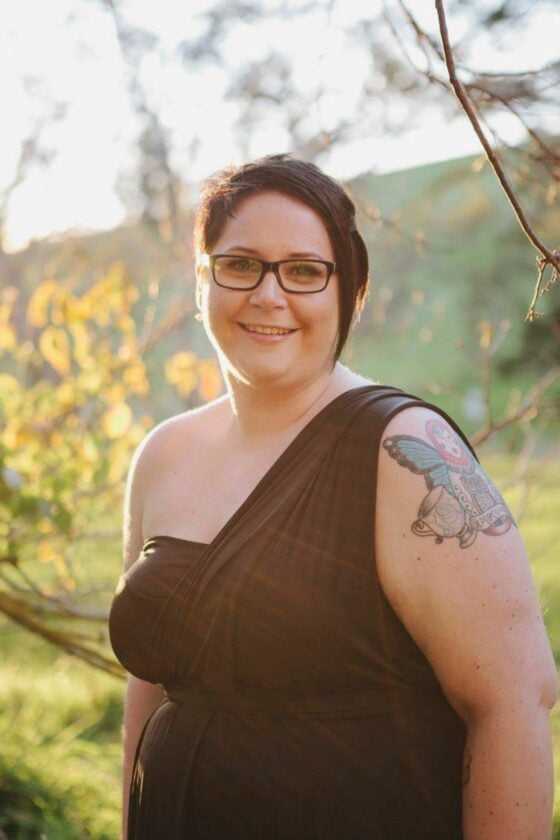
Chrissy Symeonakis
Chrissy Symeonakis is a business owner, mentor, and advocate whose life changed after being diagnosed with Multiple Sclerosis at 30. Living with permanent disability and blindness in one eye, she has spent the last 13 years building businesses, supporting others with chronic illness and disability, and speaking openly about resilience, therapy, community, and reclaiming power.
Show Notes
Part 2 of this 2-part episode, we keep the conversation going with Chrissy Symeonakis and dig deeper into neurodiversity, therapy, self-care, and what authentic inclusion really looks like when life is not neat. You’ll hear a real conversation about mental health, support, therapy, chronic illness, and the kind of honesty that can actually help people feel less alone.
Chrissy speaks openly about nervous breakdowns, OCD, being on suicide watch, and doing the hard work of facing what had been simmering under the surface for years. We talk about how therapy can be reframed as something empowering rather than shameful, how community can hold people through the worst seasons, and why inclusive practice has to go deeper than surface-level awareness. This part of the conversation is about self-care, yes, but not the glossy kind. The real kind. The kind that keeps people alive, grounded, and able to come back to themselves.
Highlights:
- Chrissy’s experience with mental health, OCD, and breaking point moments
- Why therapy can be powerful, practical, and life-giving
- Neurodiversity, authentic inclusion, and the need for better understanding
- Self-care strategies that actually support people living with chronic illness and mental load
- The importance of support, community, and telling the truth about what healing can look like
This part lands in a different place. It is still warm, still real, but there is more naming here. More truth. More room for the parts of life people often hide because they are afraid of being seen as too much.
🎧 Tune in now, and if it lands, share it with a mate.
Because everyone is different, just like you.
If you have ever needed therapy, leaned on community, or had to rebuild yourself after things got very dark, this part will probably stay with you. It is a conversation about not just surviving, but learning how to live with more honesty and less shame.
Guest bio
Chrissy Symeonakis is a business owner, mentor, and advocate whose life changed after being diagnosed with Multiple Sclerosis at 30. Living with permanent disability and blindness in one eye, she has spent the last 13 years building businesses, supporting others with chronic illness and disability, and speaking openly about resilience, therapy, community, and reclaiming power.
Guest links
Website: www.chrissysymeonakis.com
Website: www.creativelittlesoul.com.au
Instagram: https://www.instagram.com/creativelsoul/ and https://www.instagram.com/chrissy_sym/
🔗 LINKS
Website: https://shantellepoynter.com
Instagram: https://www.instagram.com/shantellepoynter/
Transcript
SHANTELLE (00:01):
This podcast wasn't born in a studio. It was built in the wild moments of real life, the messy and the beautiful ones. School drop-offs, cold coffee, and whispered pep talks to myself that maybe just maybe there's more to life than only surviving. I'm Chantel, nurse, neurodivergent woman, solo mum, and your platform Glitter Crocwearing Healthcare Hype Girl. I'm driven by one purpose. To show the world that different doesn't mean less because everyone is different, just like you. The more we talk about being considerate of all humans, not just in response to a diagnosis, the more it becomes part of everyday life. So welcome to Different Like You, where we have real considered conversations about inclusion, kindness, and what it means to be fully human. If something here resonates, share it with a friend because these conversations change the world. One listener at a time. Let's get into it.
(01:01):
They're all part of the constellation. Hey. I agree. The universe, my spiritual belief is that the universe will provide what you need when you need it and it listens and responds. And I do that too. A big part of why I ... Because people will say to me, "Oh, you're really brave." And I don't see it as brave. I do think that they mistake bravery for ADHD sometimes because I'm like, "Oh, I didn't think it was brave. Do you think it's brave because it was silly?" But so much of what I have done in my life, even if it was subconscious was because I never wanted anyone else to feel how I felt. I never wanted anyone else to feel alone, to feel like there's no options. And these conversations are so important to me because of that, because if it helps one person listen, I don't know, in their own backyard if they're having a tough time.
(02:08):
And I say to people, I say this everywhere I go in every area of my life. I cannot be everything to everyone and I never aspire to be, but I will be something to someone who's making an effort. Anybody, anywhere, anytime. If you've got a question, if you're struggling, reach out. You can find me on Instagram, you can find me on Facebook. I'm sure if you did a Google, there's a WhatsApp number or an email. I don't care. Contact me. You don't have to have a proper sentence. You can voice memo, verbal diarrhea. I don't care. But I never want anyone to feel like there's no options.
CHRISSY (02:53):
I agree. And I'm super transparent about my health journey and issues. And I remember my dad saying, "Why do you share all this? You're getting too personal." And I was like, "Dad, there are other people out there that are going through something who..." And I've put videos up and I've had strangers messaging me that haven't disclosed their MS to their workplaces because they're too scared. And then there are people that are scared to go on treatment. And I get so many people, even my real friends go, "Babe, we didn't know that this is what it looks like to you. We understand you better." Did I lose some friends along the way? Yeah, but they're not really my friends. Same, same. And I think the older I get now, I feel like 40s is a really cool age because you don't tolerate anyone's bullshit anymore and you're really selective with your time.
(03:53):
As a chronic illness person, we call it you have spoons. You get a certain number of spoons per day, which is your energy. And I remember-
SHANTELLE (04:02):
I'm an equal and you don't ever have ... Things don't cost the same every day.
CHRISSY (04:09):
And my friends know I'm heat intolerant because of the nerve damage that I have. So in summer, I'm not coming to anything. So I don't go to meetings. They're all done via Zoom. They're on the phone. My clients know the drill. But then when it comes into autumn and winter, I feel great in my body. So I'm very active and I still have friends that ... And I think the thing that hurt the most was people stopped inviting me to things. They were making a decision for me and I felt really powerless and overlooked, whereas still invite me. But if it's something that you have to pay for ahead of time, look, I don't know. So please don't do that. But if you're meeting up at a bar after, well, then I'll just pop in there and see you guys because I don't know. There's an uncertainty of ... I won't know what I'm going to feel like on the day.
(05:09):
So I don't want to then be that person to last no show of hands or stuff like that. But I love my friends that when we go somewhere, they've already looked at the accessibility, they have checked the menu, they know how many stairs there are, if there's a lift. So before even asking me, they've taken all of those things into consideration. And that makes me emotional because it actually shows you that my friends care and they're actually going out of their way to help me have-
SHANTELLE (05:42):
Person first. Not outcome. And that is genuine inclusion. So in the professional development that I do, I have a session called Neurodiversity in the Wild, and it's about how everybody is different. It doesn't matter. Neurodiversity isn't a condition. That is what we are in the world. How we then apply that is using our person first. And it so validates everything that I believe in. It's just nice to hear because I can believe this in my own bubble, but it's really nice to hear other people say because they were inclusive in a way that is meaningful to you and you felt cared about. That is genuine inclusion. And we talk a lot about accessibility in our world, I think, but we get inclusion and accessibility mixed up and everybody is deserving of inclusion.
(06:38):
There are ways that we can include people. It just might need to be different. So you might not be able to go to that paid event. That doesn't mean you're not interested in what the event is about. So how can those people that are going still include you in that information because they know it's something you're interested in? Or how can you be included in that? But you're right. It might mean that you don't buy the ticket, but there might be a Facebook group that is in afterwards, or there might be the information. How can you access it because it's still something that you're really interested in? And that's where I think those feelings I have the same of, "Oh, we don't know whether to invite her because we don't want to put her in a position where she's going to say no," because all they have valued in that interaction is whether I'm going or not, not that it's something I'm interested in or that they want me there.
CHRISSY (07:25):
Yeah, absolutely.
SHANTELLE (07:28):
And I do find that very interesting. So funny that you talk about the temperature because I didn't realize how much we struggle with the heat in our family. And we live in Brisbane, so she's spicy for most of the year, but we equally love that. However, it's only been recently that I've started using the economy because when I was growing up, it was like, "Don't put the air conditioning on, you're ridiculous, all the energy, all of that sort of stuff." And I've realized that we actually need that consistency in temperature in order to function.
CHRISSY (08:02):
Yeah, absolutely.
SHANTELLE (08:03):
And yesterday, I'd been feeling kind of a bit irritated, excited because of the things that I'm working on, but irritated. And yesterday I had a lot of a brain dump to kind of do and then sift through the information. And I was sitting at the dining table and I had all my papers everywhere and I was like, "Oh, it's really hot. I'm getting excited. I need to regulate myself. What do you need? Blah, blah." I thought, hang on a minute, this actually is not about me. It's about the environment. Turn the air conditioning on, sister. And it changed my whole day.
CHRISSY (08:36):
Yeah, I do that as well. Sometimes I get really irritated, same thing, that irritability. And again, I ask the body and I'm like, "What do you need right now?" And it's like, "Water." I'm like, "Okay, but food, you haven't eaten today." And I do notice I do get agitated when I get warm and my staff even know, I'm not mean or rude to them ever because I had terrible bosses. So our workplace culture is so beautiful, but sometimes the girls are like, "Have you had lunch yet?" And I'm like, "Oh shit, I'm being annoying."
SHANTELLE (09:15):
Hangry is real, right? Yeah,
CHRISSY (09:17):
Yeah.
SHANTELLE (09:18):
Or the plate of food arrives and you're like, "Oh, thank you. That's what I
CHRISSY (09:22):
Needed." Or they're like, "Is your air con on? " I'm like, "No, it's not. " And they're like, "I'm like, okay, cool. Thank you for the reminder because I get so caught up in doing the things that I forget basic functionality and food, water."
SHANTELLE (09:37):
Same. I think that people who don't have a chronic illness that that affects or who don't understand neurodevelopmental conditions like ADHD and autism cannot fathom that we forget to eat and drink. And it's not just a flippant distracted with the butterflies flying past reason that we forget, it literally doesn't hit our radar.
(10:08):
And what I love about nursing, it really made me realize this without realizing it, was every single day I was not even conscious of meeting my basic needs, but I was expecting myself to then be the best at operating as a mom for my kids in my work in wherever it was. And it wasn't until I was really able to look at that. Okay, I need to eat, drink. And on podcast days, do you know that's the day I'm the worst because I'm so excited and I'm having the best time and I'm talking and I have to find that sensible Sally in me and go, "Okay, I have to set an alarm. Go to the fridge, get your food." And I do. And I need to have a calendar invite on podcast days of this is the time that you're going to eat and drink because if you miss this window, it's not a vibe.
CHRISSY (11:00):
Yeah. I had a nervous breakdown after COVID, so it was a couple of things. So it was like December 2019. So there was the bushfires that happened across Australia and I had clients that were impacted. Excuse me. My friend passed away and then COVID hit and then I had all this groof and trauma that I had never dealt with. And my cycle of not dealing with trauma was to keep busy. And as soon as I was forced to stop, all of this trauma came back and back, sorry. And so it just got to a point where all this trauma hit me, hit me, hit me. And I literally broke down and I had to call my brother and just say, "I don't know what to do. I need help." And so he recommended a clinician that he had seen and he's like, "Call her right now." And she does timeline therapy, which is amazing.
(12:12):
I love it. Tell me more. So essentially, her name's Emma Romano. She's an amazing lady. Essentially what it is, is rather than going back and rehashing the old trauma and talking about it and then being triggered again, what she does is it's like a hypnosis type scenario. You go back into those moments in time and then what you do is you remove those thoughts and memories and then plant new ones in. So you've got an event that's happened, you go into a filing cabinet, you find that file, you rip it up. And then instead of that now, you plant different memories. And it was really interesting. One of the things she said to me was like, "What is your anger at?" And I was like, "Oh, out of 10." And I'm like, "Oh, six." She's like, "Okay, what's your guilt at?" I'm like, "Four." And she's very sweary and I am too.
SHANTELLE (13:13):
I love that. Me too.
CHRISSY (13:14):
And she's just like, "Can I just say something to you right now?" And I was like, "Yeah." She goes, "You're full of shit." She goes, "All of these are a 10. Are they not a 10? You wouldn't be here. You're just lying to yourself and I can see that. So can we just put 10 next to everything?" And I was like, "Yep, okay." And in three sessions, she was able to move. So I had feelings of rage, guilt, shame, sadness. And one of the big ones was rage for my mother, the narcissist. And I haven't spoken to her in 15 years and I had to cut her off completely, but I was still harboring all of this anger and sadness and all this for my mom. And I changed that. And so we were able to switch it from rage to, I wouldn't say forgiveness, but I would say it was probably more empathy because I could then actually understand it wasn't her, she has an illness, she is bipolar.
(14:22):
I could actually then remove it.
SHANTELLE (14:25):
You can understand you don't have to agree with it. You don't have to like it. You don't have to be okay with it, but you have an understanding.
CHRISSY (14:32):
And this is the thing, right? My birthday would come up and I'd get sad and I hated my birthday and all this stuff. And I'm like, "You know what? She doesn't even care. Why am I letting an impact all these feelings and all this affect my life as an adult?" And so I see a hypnotherapist, another lady once a month, and I'm so excited to have that appointment with her because I know I have self-development and we never know what we're going to talk about, but it's what comes up. And then she's like, "Hey, what are you going to work on? " And I was like, "Oh, limiting self-beliefs or money stories or health, wellbeing." And then I always get a session done before I go home to see my dad and I'm just like, "I know my dad's going to trigger me. Please give me some coping mechanisms.
(15:25):
I want our relationship to be enjoyable as adults. I want it to be respectful." And she does that. And then I now have the tools to say to my dad when he's complaining about another sibling and I'm like the family manager, so everyone comes to me to solve everyone's problems and I'm just like, I actually can now say to my dad, "Dad, I don't enjoy you having these conversations with me about my other siblings. If you have a problem, you should be talking to them. This is not how I want to spend my time with you. " And then that breaks his pattern and he's like, "Oh yeah, okay. I'm really sorry about that. " But it's even given me the tools and the confidence to say to him, "You know what? When I was a kid, you were pretty mean to me and you didn't treat me well and you smacked me with the belt and all this stuff that was acceptable in the 80s, right?"
SHANTELLE (16:16):
I think it's okay for us to be able to say to our parents or the people in authority, and this is a whole nother podcast conversation for me about the people in authority and how they influence us as we grow up. But I feel like they need to not see it as a criticism and a judgment. We're sharing our experience. And I do talk about this in my PD about psychological safety, is that it's actually not up to the person creating the space to decide whether it's safe or not. It's the person that is experiencing it. So we need to be able to say, "Hey, when this happened when I was a kid, this is what it felt like. I have a different understanding now of where you were at, but it doesn't change how I felt and what it influenced in my life."
CHRISSY (17:04):
Yeah. And I said that and I told him, "It's cool because whatever he picks me up from the airport, we've got about an hour and a half or a three hour drive depending on where we're going. And it's just me and dad." And I was like, oh, he's like, "Oh, are you still doing the therapy thing?" I was like, "Yes, I think you should. I think everybody should get therapy." I'd tell everybody, I'm like, "Just get therapy." But I've explained some things to him and he's like, "You know what? I was a bastard. I am sorry. And yes, okay, I appreciate that that was tough and I'm sorry. I didn't know better."
SHANTELLE (17:38):
Because they can then understand us, right? And maybe how your illness or why you go to therapy, because that was then what you built your whole life on. My nan and pop are quite possibly ... No, not quite possibly. They are just the best humans. And I've had two moments very similar to what you have just said, which I find interesting because there is definitely consistency across this in our constellation of considered humans. One is there is the point that broke you. And for me, it was a similar situation. It was compounding factors. My children were getting regular therapy because of course I made sure that box was sticked for them because good mom, but I had none. And a situation had happened in the morning and I was just a mess and you rang your brother in your situation and I rang ... I didn't know what to do.
(18:41):
I didn't know who to ring. And I rang this therapy center and I holding on for dear life, bless the girl who answered the phone. "Hi, I'm Chantel. I don't quite know what I need, but I know I need some help. "And I really held it together well until she asked two more questions and then I was just flatting mess. And she said," You know what? I actually don't have anyone that you can speak to right this second, but what I'm going to do is hang up, go and speak to the supervisor, we're going to ring you back. "And that was all she could do in that time and that was amazing and it changed my life. That then put me on the path of regular therapy. And here's what I think about therapy, right? And I'm exploring this a little bit more with some fun people and it's completely new to me, so it's very scary.
(19:32):
We have a branding problem for chronic illness and neurodevelopmental conditions because I feel like it's just magic, but because somebody didn't understand it, who didn't have a chronic illness, who's not neurodivergent, was like, " It must be a problem. It's a deficit. It's a disorder. "Specifically for ADHD and that neurodevelopmental community, it's magic. We have the wizard who perfects over years his practice for whatever it might be, that spell and who doesn't want to go and see the wizard. So there's your psychologist and your kind of autism and then we have curious creatures. We don't need answers. We don't need specific events. We want to learn about 600 things because it's fun and we never want to stay in one tree, one borough, one home. That's not how we operate. And there's your ADHD. And then you have your magician who doesn't really have any instructions.
(20:39):
It's about the feeling and it just creates wonderful things and nothing really makes sense. A little bit of ... Ended up with Abrica Debra kind of dyslexic. What is the order of those letters? But we just need a rebrand. And I feel the same with therapy. If we call the people that help us, our wizards and our magicians, let's flip the script. It's not ... Well, you go to therapy every week. It's like, what do you mean you don't have a wizard that helps you? Are you crazy? I honestly ... And they say to my kids, I'm like, " Are you seeing the wizard today? Or you've got the wizard this week, the magician. "And they're like, " Yes, I'm going to learn about myself and call stuff and why shit feels hard and they're going to help me. Why are we so fucking scared of that?
(21:30):
"I don't understand. And I feel like it's just a branding issue and we can solve that problem. That's an easy fix.
CHRISSY (21:39):
I actually call my therapist, Emma, she's a witch and I'm a witch as well.
SHANTELLE (21:46):
Well, you know what? Those girls have got it sorted. They are operating when the big light is off, when no people are around in their own little space eating their safe foods. I'm all for it and wearing the same outfit every day because that's hard work to figure out what to wear sometimes. So I'm all for a witch. I love it. I love that. I do. I feel like this is the magic that we have forgotten we need in the world and it's really important.
CHRISSY (22:18):
Yeah, for sure. And I've seen myself evolve. I would just say in the last five years, I'm doing the work, I'm doing the shadow work, I'm listening to Louise Hey. I go to sleep every night with a meditation on about abundance, manifesting. And I learn languages in my sleep and I just want my brain to be happy and be learning. And every single day at the end of the day, I just say to myself," What was the best thing about your day that happened today? "And I'm in business, I am killing it and crushing it. We're talking huge, big results right now. I
SHANTELLE (23:05):
Fucking love that view.
CHRISSY (23:06):
Everything and everyone's ... And I don't even tell people half the shit I do, right? Because I don't want to put it into the cosmos because in the Greek culture and Turkish and everywhere, there's the evil eye, like the evil eye. So I remember you'd get sick or something or something would happen and my grandma would say," Oh, someone's given you the matte, the eye. "And she'd do a little cleansing to get rid of it. So I'm so conscious that if we put stuff out there, especially in Australia, like I've lived in the US and we have tall poppy syndrome here so, so bad and people get jealous of your success and they curse you and then they're like, " Why are you successful? "And I'm not. I'm like, " Please, I work seven days a week. I work on public holidays, weekends. I take every opportunity that I can find or create for myself.
(23:56):
So I'm actually doing the work and showing up and that's how I'm achieving things. They're not just given to me. So yeah, I feel like I hide and don't celebrate my success as much as I could because I don't want the negativity around it.
SHANTELLE (24:10):
I 100% agree. And those words that you just said, I actually voice noted this morning. That's sometimes how I do my gratitude journal or how I'm feeling about the day. And that is exactly what I said. Why am I scared about putting these things out there? What is the driving fear that I have? "And as I was voice noting to myself about, and I did, I was like, " Tall poppy syndrome, that's our culture in Australia. How shit is this? It's fairy bread, tall poppy syndrome, songs and a clothesline, but is it? Do we have tall poppy syndrome or are people just fucking scared because they don't know how to do shit different to get what they want? "So then outcomes hate driven by fear and shame. I don't know, but I mean, I feel the same and it's so shit. So here's the thing, I want to know all the things that you do.
(25:12):
Tell me what you're happy to share, what maybe you're like, this is bubbling away and it'll come out at a certain time, so don't say anything. I'm happy for that. But I really want to celebrate what you do and who you are because it's amazing.
CHRISSY (25:29):
Thank you.
SHANTELLE (25:29):
And I know you know in your brain that you show up every day and you do the hard work and you love what you do and you listen to meditation, but I really want to acknowledge that I didn't know I was going to get teary because it is so hard to do that every day in different ways when you have fluctuating capacity, when you are killing it in your work life. You have to put so many things in place in order to be able to do that. So it's not that you just show up, it's all the other shit that you do around making sure you can show up to do that. That's impressive.
CHRISSY (26:11):
So grateful for my husband. He's like the best human ever. We've been together for 20 years and he very much does not like to be in the spotlight ever. He's just that silent in the background supporter. He's the one that, we share the jobs in the house and he does the things that are hard for me to do with my chronic illness and then I do other things and it's really a team dynamic. We look at each other and we'll high five each other, like fist pump each other like, "Hey," Dream team, right? Yeah. And it is that team mentality. And the best piece of advice I received from somebody was outsource the things that you can't do that take up your time and energy where you could be making money. So one of the easiest things was getting a cleaner. So I get a cleaner every fortnight, they come in for an hour, they do what would take me probably five or six, and I can keep working and make more than what it costs to get the cleaner, no brainer.
(27:15):
The other thing that I also was like, "Well, what else can I do? " And my grocery shopping. So I do my online shopping with the grocery store.
(27:23):
And you're paying $10 for somebody to go and get the stuff off the shelf for you, deliver it to your house. Why are people not doing that? And you don't buy shit you don't need.
SHANTELLE (27:34):
Do you feel like sometimes you're like, "This is amazing." I haven't had to find the energy to sometimes put on a proper bra and go out, get in my car, find the keys, pick up my bag, make sure I've got bags to shop in. There's so much shit before I've even got to the fucking shop. People don't understand that.
CHRISSY (27:54):
No, everyone should do online delivery.
SHANTELLE (27:56):
I'm like, "If I spend my spoons doing that, fuck, if I'm doing any work today, it's not happening." As I do, I squirreled from the point that I wanted to make before that I think is really important and it came back to really understanding who you are and being able to think clearly of these are the adjustments that I want or these are the considerations I'm going to make of online shopping or whatever. My nan, so the two things that have seemed to be consistent is the complete breaking point in lives, but then the understanding, and people find this in different ways and you have through Emma, was my nan said to me, "You never ever can forgive somebody for something that they've done that is unimaginable to you, but you never give them the power and control over your life because that's always yours and you don't have to forgive them, but you need to take that control of your life back back."
CHRISSY (29:00):
Yeah, for sure. That's wise, man.
SHANTELLE (29:03):
Oh, she is so wise and so humble. And the day that I get her on the podcast, I'll be like, "I've made it. " I'm not nervous about speaking to anyone or approaching anyone to say, "Hey, come on the podcast." But I think the day that Nan comes on will be the day that I'm like, "Yep, did it. " She's incredible and so aware and just the most incredible human being. And through creativity, she was a nurse as well. She worked in palliative care and really lived the importance of humor in your life and creativity and connection and fostered that among 11 grandkids. And I've lost count of how many great-grandkids now. And we all say the same, "I think I can speak on behalf of our family that she's a matriarch without a doubt." I And thank goodness that she is. If you wished we did one thing differently in the world, either in your industry or within health, what would it be?
CHRISSY (30:16):
Good question. I think, like you said, the human first, right? It's about putting that person first, not treating them as a diagnosis or just another number. I think having that human connection, that building of rapport, trust, love, compassion, are all super important. I treat my staff like they're my children. And they have chronic illnesses or they drop out to do stuff with kids. It's a really super flexible place. And I just feel like there are so many rules or expectations that have been passed down from us generationally, which are bullshit.
This pressure for academia, this pressure for buying a house, having kids, getting the picket white fence, all this crap.
SHANTELLE (31:16):
It's ridiculous.
CHRISSY (31:17):
Absolutely. And people are just going through the motions and what they think their life should be as opposed to one of my mantras is create the life you'd love to live. And
SHANTELLE (31:31):
Life on a vibe, right?
CHRISSY (31:32):
Yeah, absolutely. And just freaking live your life. Pursue your passions. Yeah. Stop getting wrapped up in-
SHANTELLE (31:41):
Don't get caught up in the bullshit, right?
CHRISSY (31:43):Yep, for sure.
SHANTELLE (31:44):Yeah. My nan sent me a message three days ago and it just popped out of nowhere in Messenger. I mean, we talk pretty much every day in some way, but she sent me a message and she said, "Annie, it's very important that you do something today that just makes you happy. It doesn't matter how silly or ridiculous it is. " I just love her so much. And I got that message and I was like, "Nan, your 81 years of wiseness, I love that it's you sending me this message. It's not a therapist. It's not coming from anywhere else. She's got 81 years in this world. She knows what's up." 100% she's my heart girl. So many people will say to me in nursing because I moonlight as a healthcare hype girl over in the scrub hub, backing the nurses backing the nation because working in healthcare is wild.
(32:40):
But she 100% is my hype girl and people will say, "How do you have so much energy? And how come you're not exhausted like the rest of us in nursing?" And I say to them two things, I have my own heart girl, which is my nan. That's how I can heart girl for everybody else. And because of that, I have flexibility and I life on a vibe. I don't have a ward job that I kill myself to be in every day and I'll probably rent forever because I want to live in different parts of the world.
CHRISSY (33:17):
Yeah. We rent too. And that's when I said to ... I was actually saying it to my husband the other night and I was just like, "You know what? I didn't care that we rent because same as you, we might want to go back to America. We might want to do this. " And we don't have that stress of- The pressure. Yeah. Everything. Interest rates, this, this, this, this.
SHANTELLE (33:37):
Right. Everyone's talking about interest rates. And in my mind, I always do have a bit of a giggle when I'm in, I don't know, find myself in a serious room that I'm not built for long-term, only cameo visits. And they're all talking about the interest rates and stressful and, "Oh, I wonder what's going to happen here in property." And I think, "I'm so glad I don't give a shit." Yeah,
CHRISSY (33:55):
I'm the same as you. I give my shits to think. It's like that Mark Manson book, The Subtle Art of Giving Apart. And I'm like, "What do I actually have today that I'm going to give them to you? I'm not going to waste them."
SHANTELLE (34:10):
Yeah. Did you blow bubbles with your kid this morning? Because I did.
That's what I give a shit about. So I feel like we could talk forever. Whereabouts are you located in Australia, Chrissy?
CHRISSY (34:21):
I live in Sydney. So Kings Cross. I'm like five minutes from the Coke sign, so I'm right in the city. I love it. The city girl, the country kid that moved to the city, I love a big city.
SHANTELLE (34:36):
I am the flip way. I just want to be outbush as much as I can and hang out with the people in the long grass. That's where I'm most at home. But there are times when I'm like, "You can take the girl out of Melbourne, but you can't take the Melbourne out of the girls." So I totally understand that. I'm actually going to be down around Sydney Way over the next few months, and I would love to catch up if that's an option. And I'd love to have you on again to talk about some more specialty areas if you're open to it because you are just such a vibe and I'm here for it. I love it. You are definitely part of the constellation of considered humans and I feel so privileged that you chose to spend your precious time with me.
CHRISSY (35:22):
I really feel like I want to cry. But in a good way.
SHANTELLE (35:26):
Happy tears. They're okay as well.
CHRISSY (35:29):
But I feel like we've had such a beautiful soul connection, so thank you. It's been a really great way to start my Friday and my weekend. So thank you so much, Chantel.
SHANTELLE (35:39):
Happy Friday. My absolute pleasure. I'm going to go and draw something, I think, with tears of happiness and joy flowing down my face for meeting you. Thank you. Have a wonderful rest of your day.
Thanks for hanging out with me on Different Like You Today. These conversations matter because when we take the time to have considered conversations, the world gets a little kinder and a lot more humans. I'm Chantel, your healthcare hype girl, reminding you to be kind, be curious, and always be learning. If this resonated with you, share it with a friend because small actions create change to support everyone. After all, everyone's different, just like you. Until the next step, keep showing up exactly as you are.
Share with a friend