Season 2 | Episode 7
Learning Outside the Usual Mould | Part 1
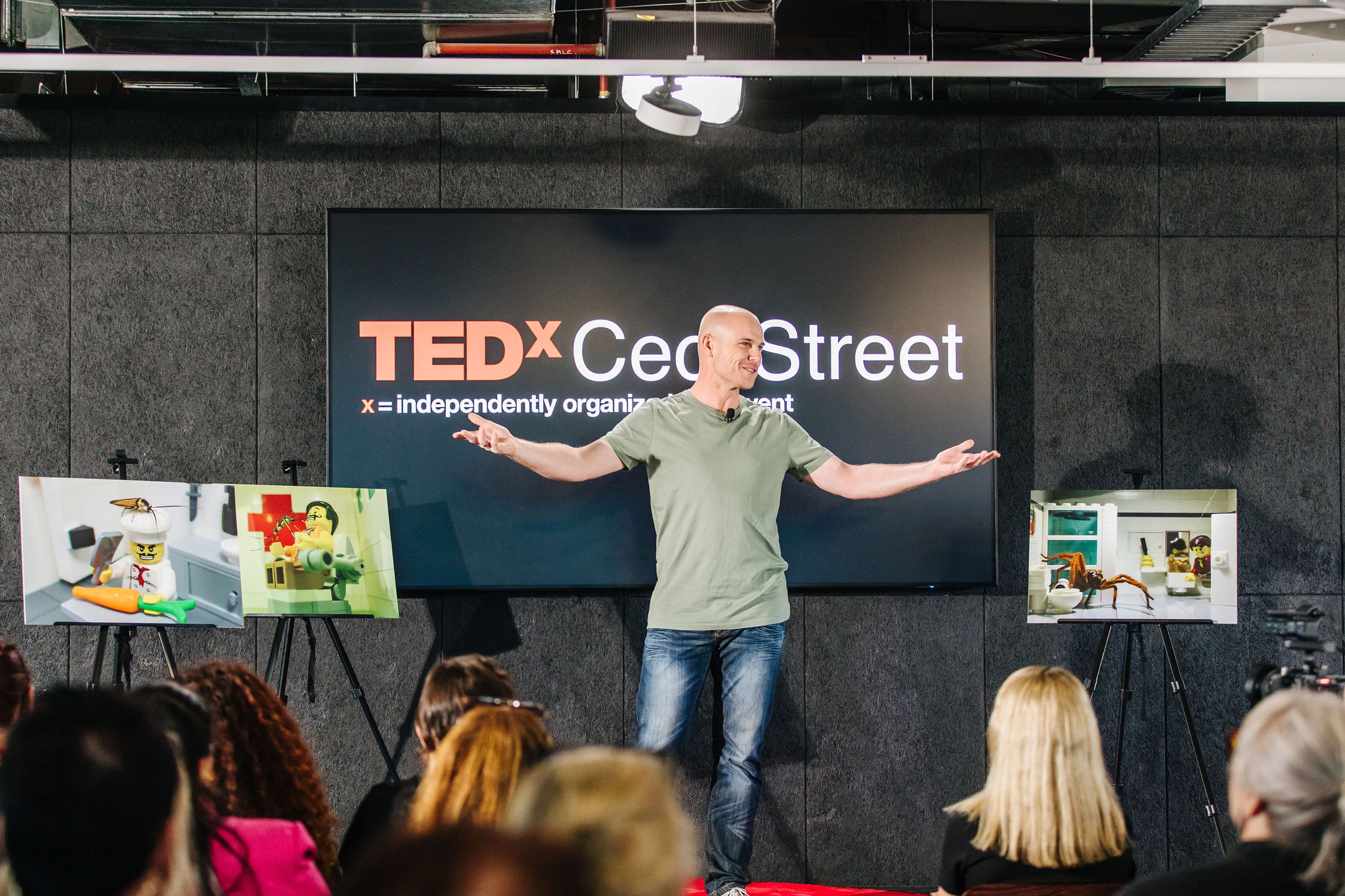
Steven Gill
I'm a 41 year old neurospicy (diagnosed as "gifted" as a kid, probably AuDHD) environmental educator. Alongside being a Far North Queensland Reef and Rainforest tour guide, I do Australian school trips and short American college trips, but my real baby is my own social enterprise, Gone Buggo. Thanks to the way my head works, Gone Buggo is anything but normal; weaving art, science, entertainment, education and philosophy and conservation together into a one-of-a-kind multi-platform venture which is undeniably effective but incredibly difficult to market.
Although things are slowly improving these days I've got 3 and a half years of experience of being too much, too complicated, and too unique to be embraced by the mainstream, even though I'm just a passionate activist with a unique take on conservation.
Show Notes
In Part 1 of this conversation, I sit down with Steven Gill to talk about the mind behind the work.
Steven is an environmental educator, science communicator, and the founder of Gone Buggo. But before any of that, he was a kid being labelled, misunderstood, and pushed through systems that did not quite know what to do with someone whose brain worked differently. And honestly, that part matters.
We talk about neurodivergence, learning styles, school experiences, and what it feels like to be seen as too intense, too complicated, or too outside the mould. Steven shares how his brain pulls together ideas, patterns, and pieces of information in a way that is not always easy to explain, but makes complete sense once you stop expecting everyone to think the same way.
Highlights:
- Steven’s early experiences of learning and being labelled
- The difference between intelligence and being understood
- Neurodivergence, curiosity, and making connections others might miss
- Why rigid education systems often fail different kinds of learners
- What happens when someone is seen as too much instead of properly supported
This part of the conversation is really about what it means to grow up knowing your brain works differently, while constantly being measured against systems that reward sameness. There is a lot here about identity, belonging, and the quiet damage done when people are only valued if they can fit the usual mould.
If you have ever felt too much, too layered, too different, or too hard to explain, this one will land.
Listen wherever you get your podcasts.
Feel this? Share it. Say it. Start the convo.
🔗 LINKS
Website: https://shantellepoynter.com
Instagram: https://www.instagram.com/shantellepoynter/
Guest bio
Steven Gill is an environmental educator, science communicator, Far North Queensland reef and rainforest guide, and founder of Gone Buggo. His work brings together education, entertainment, art, philosophy, and conservation in a way that is anything but standard.
Connect with Steven:
LinkedIn - https://www.linkedin.com/in/steven-gill-9223422aa/
Instagram - https://www.instagram.com/gone_buggo/
Website - https://www.gonebuggo.com/
Email - steven_gill@live.com.au
Transcript
SHANTELLE (00:01):
This podcast wasn't born in a studio. It was built in the wild moments of real life, the messy and the beautiful ones. School drop-offs, cold coffee, and whispered pep talks to myself that maybe just maybe there's more to life than only surviving. I'm Chantel, nurse, neurodivergent woman, solo mum, and your platform, Glitter Crocwearing Healthcare Hype Girl. I'm driven by one purpose. To show the world that different doesn't mean less because everyone is different, just like you. The more we talk about being considerate of all humans, not just in response to a diagnosis, the more it becomes part of everyday life. So welcome to Different Like You, where we have real considered conversations about inclusion, kindness, and what it means to be fully human. If someone here resonates, share it with a friend because these conversations change the world. One listener at a time. Let's get into it.
I'm so excited and grateful that you chose to come on the Different Like You podcast. I came across your profile through Gone Bugo and a totally random way that it came about. I wasn't looking for anything specific or at anything particular. And I loved it because it was so different. And that's what really intrigued me. I thought I'm just curious to speak to you. I think one of my strengths that I recognize now as an adult is that I'm a curious individual and then hearing the different things that you've done. I really love that. So typically when I record, we just kind of have a conversation. There's no particular script. I will ask a few prompts around difference because obviously that is what I like to have is considered and kind conversations about things that are different in different industries or things that we wish we could do different or have seen different.
I'm a big believer in we don't have to agree. We ask to understand and have questions. And I love that about science. I think that gives the most wonderful element of kind of forced curiosity is when we do research and we ask questions and we want to know more. I had a whole life in people and culture before I came to nursing later in life, and then that really ignited the inner nerd in me that I did not know was there. And then have since gone on down a few different rabbit holes. One that I'm in at the moment is I'm in a deep dive of a jellyfish rabbit hole as we look at neuroscience. And yeah, so if you have any information, any directions or people that I should speak to, I'd be really grateful because it's a fascinating rabbit hole to be in.
STEVEN (02:59):
Yeah, it is. It's amazing looking at other life and what we can learn about ourselves from it, definitely. Something as simplistic as a jellyfish is actually quite an intricate way to look at ourselves. So yeah, that's a worthwhile rabbit hole to explore.
SHANTELLE (03:17):
It's been fascinating. It's been about six months and surprisingly, and I think the world works in weird and wonderful ways. It started as I'm preparing research, putting together some research and a scope review. And then it was when we're on the Barrier Reef that I was having conversations with the marine biologist and I thought, "Oh, hang on, I think there's something more in this. " And so the rabbit hole continues. So if you've got anyone I should speak to or anything you think is worthwhile looking at. I'm all ease. But I guess, like I said, I came to you through, I found you through Gon Bugo, but I know that there is so much more to you. So aside from God Bugo, who is Steven Gill?
STEVEN (04:04):
Well, I'm trying to figure that out every day, but I guess I am a science communicator, I guess, is the label that I slap on myself mostly now. I have five jobs at the moment, but they're all science communication jobs. So I work on the reef as a guide on snorkel boats. I take people out to the reef. I provide interpretive commentary. I deliver engagement experiences in the water. I also do rainforest tours. So I do full day daytree rainforest tours and take people in on immersive experiences in the rainforest as well. And having both sides of that coin I found really, really valuable because working in the reef, it's very easy to forget the rainforest exists at all. And working in the rainforest is very easy to forget. The reef exists at all, but both ecosystems actually tie together very, very nicely. And there is a lot of overlap and a lot of collaborative effort between those two ecosystems and the mangrove that borders them.
STEVEN (05:11):
And being able to work on both sides is really rare, but really valuable. Being able to talk about the reef while I'm in the rainforest and the rainforest while I'm in the reef and be able to provide broader context and better understanding. So I do those jobs, which has led me into doing marine science courses for American college students that come here on their summer break. So I do deep dives with marine science with mainly freshmen, sort of 20, 21, 22 year old kids, although I have had some sort of senior classes come in and a lot of it is to do with humans and environment, citizen science. It's not necessarily that they're marine biology students. It's just that you need to understand some of the biology to talk about the ecosystem and the pressures and everything else.
SHANTELLE (06:02):
I would imagine that having that foundational understanding delivered in a way that is different to how their university is going to deliver it is really valuable.
STEVEN (06:15):
Yes. And I actually, I've started getting feedback around that in a lot of the different avenues that I do, whether that's in a tour I have people say, "Oh, it's amazing how scientifically literate you are, but how accessible you make the information." Then you get these scientist kids who are like, "It's so nice to hear it in a way that's actually interesting." My other job, I work with Australian schools doing school programs as well,
STEVEN (06:42):
It's multi-day programs, trips in the far North Queensland region that are curriculum aligned with anywhere from sort of, I think I've had some nine year old kids all the way up to sort of seniors in 16 years, 17 year old kids. So it's always science communication. It's just different, I guess, lenses, different windows into science. So my five main jobs, because Gonbogo is my thing. I don't count it as a real job because it's just my business. It's all different types of science communication.
SHANTELLE (07:17):
I love that. And in the feedback that you've received, the different way that you deliver the content, what do you think has been, or has there been a key theme? Is it the words that you use? Is it that it's experiential and immersive? Is it what do you see as the benefit that they're seeing?
STEVEN (07:39):
To be honest, it's a mishmash of things. I bring a few things together, which is funny because I've found this path later in life and have these, I guess, skills that have always been something of a problem, which is interesting. That was why I was really interested in having a chat with you is because growing up, where I sat on the spectrum, who I am as a person, how I think, how I operate, didn't fit. And I grew up being an outcast and an outsider, and I was terrible in school. I went through all 12 years of school, but I just scraped through because I didn't care enough to try, but wasn't bad enough to fail. Teachers hated me. I spent most of my time sitting out in the hallways not learning, and now I spend all of my time teaching students.
SHANTELLE (08:35):
Feel the same. I had a very similar experience in school, except instead of sitting in the hallway, I was very compliant and quiet and sitting in the classroom, but not learning a single thing. And then they're saying, "Well, if you just focused more, if you just listen more," I'm like, "I don't know how much more listening my ears can do. I'm here every day. Help me out. I just can't understand what you're trying to teach me. " And then grew up believing that I was just terrible at everything and came to this point where now that is all I'm so excited to do, is educate and talk about two different people in the community and talk about so many different things. And I love that you really resonated with that too.
STEVEN (09:20):
So I find, especially with younger people, I find a lot of teachers are really impressed with my delivery and impressed with the engagement that I get from the kids, which I find kind of ironic because if I was under that teacher's tutorlage, if I was in their class, I would've been the problem kid in the class as well. And they're like, "I don't understand why they love you so much." It's because I'm everything you're not and everything you hate about them. I am that kid who sat at the back and flicked rubber bands at Suzie in the front row and spitballs at the windows. And I was a bad student, but it's kind of given me a way to engage young people differently. Do you
SHANTELLE (10:02):
Think you were a bad student or do you think the environment that you were in was not conducive to the way that you needed and wanted to learn until you were old enough to kind of make the decision of, "Nah, I'm going to flick this band because it's going to be fun." I appreciate there's an element of that as we get older, but early on, what are your thoughts?
STEVEN (10:22):
Look, I believed. I believed for the entirety of my school life that I was the problem. The teachers always told me I was. The teachers always told me that I needed to pull my head in. And I did believe it, but I know now with everything that I'm doing, everything that I've done, I can learn and I can learn well. I have really great information, retention, but it has to be engaging to me, which is very, very common with people on spectrum. I sort of all DHD, so a little bit ADHD and a little bit autistic, and it just brings in this sort of correlation of having the energy to focus, but also having that data retention. And I'm good at learning, but I'm not made to sit in a class and learn.
SHANTELLE (11:10):
Me either. And that AudHD is my diagnosis as well. And I feel like when we look at the presentation, we look at the DSM-5 criteria, it is not all of one and all of the other. It is actually its own unique presentation. And I find that so interesting in itself. What I love so much about having the knowledge and information of the diagnosis is it helped me understand that I could do so many things and it's okay that I have collected these skills over 20 years before I came to nursing and they're actually all really valuable, but they do have a core theme. Do you find across all of your skills that there is a common, I guess a theme, mine is caring and education is in every single element that I have worked in, that the skills I collect, the things that I enjoy, it always comes back to those two fundamental things.
STEVEN (12:09):
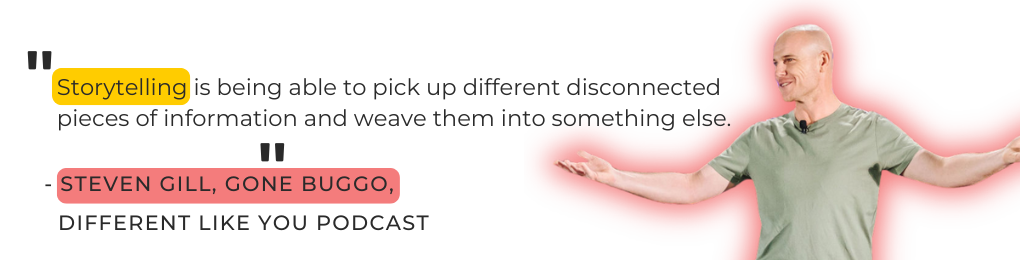
I think for me, it's storytelling. It's I guess being able to pick up different disconnected pieces of information, understand them in their own isolated way, but also weave them together into something else. As a kid, I wrote a lot of poetry. I started writing a couple of books that I never got around to finishing. I was always engaged with stories and interested by stories. And so I have, I guess, become a storyteller, but an educational storyteller. So now whatever I'm doing, whether it's an hour long gone Bugo presentation or whether it's a nine hour tour in the rainforest, I'm telling stories which people can live through, put themselves in, internalize in personal ways and learn more from, which we now know scientifically. Everyone remembers better when they're learning through stories because you can place yourself in it. Facts become so difficult to connect with, but stories are just a life that you didn't live yet.
And yeah, so storytelling's always been my thing. Whatever I was doing, wherever I was working, even in hospitality, it was the stories about the way alcohol was produced or the stories about the way that the wine was perfected. It was always just understanding the story and being able to retell it in an engaging way.
SHANTELLE (13:30):
That's so great. And I think such a strong link to how indigenous people translate and educate. That is how they do it. And I think we lost so much of that somewhere in our education system and it still is wild to me how we've managed to come so far from where we need to be. And I don't know how we have gotten that polarity in education and inclusivity because I also feel like in an effort to be more inclusive and more accessible in education specifically, I think we have then isolated people or really segregated them. And what I feel like my experience with my kids, particularly in nature, they're 15 and 13. They're both all DHDs as well and clever in different ways. My daughter is the oldest and my son is 13 and they have the most incredible different strengths. And we talk a lot about how the environment that you're in will determine how you perceive yourself, what you value as a strength, what someone else values as strength.
Every time we are traveling and on the road doing a Scrub Hub road show, or we were just in October last year, we went from Brisbane to Mount Isa and then into the territory down South Australia, into New South Wales and then back home. It was a lot of kilometers and we got a different car when we came back. So we learned some things, but all Auru, particularly when we're in Yala, we were really privileged to have spent some time with some of the Unangu people and hear their stories. And the kids would say to me, "Mum, that makes so much sense." Why do we see time as linear? Because it doesn't make sense. Everything that you've experienced in the past, even that you have experienced, mom, will shape what we do now and everything that we do now will affect the present, whether it's in nature, whether it's a decision we make.
SHANTELLE (15:39):
So it all exists at the same time. Why don't they teach us that? And I was like, "I wish I could really give you a concise answer, but I don't know why we moved so far away from understanding the world and sharing the stories." I think people say kids learn so much on the road or they learn so much to experience. And I think it's because of the storytelling. I think it's because it's immersive. I think it's because they're encouraged to explore, be hands on. I think you would've observed that through the different groups that you've done in schools. Is that typically you think, "Well, they've brought me in to do this one day or one thing, but they could literally turn over the terms content in two days if they took them down to the beach or the forest or whatever."
STEVEN (16:22):
Yeah. And I tend to get a bit carried away and put a lot more information in as well because it's not ... I mean, with the school stuff specifically, I've done school trips that were supposed to just be fun trips, but in the little moments in between the fun stuff, I will just point at something and share with the kids a thing about it and it becomes a lesson. And I've had teachers at the end of trips that were just supposed to be, let's go and have some fun in a new place, be like, the best thing about this whole trip's been everything we've learned from you that was amazing. And it's just because there are things that you can pick up on the way. And when you're just standing there killing time, waiting for the next thing to happen, you're surrounded by things happening if you pay attention, if you look closely, if you have a look through these things.
And yeah, nature has just become this incredible complex storybook to live inside of. And yeah, I do find, especially with kids, I have parents come and say, "Oh, my kid sucks at school, at science. They don't like it. They don't sit still, they don't want to do it, but they have dogged your every step and they have listened to every single word you've said and I don't understand why." Well, because we're outside and we're moving and it's engaging and it's real and it's tangible. It's not hypothetical pages in a book.
SHANTELLE (17:45):
Thanks for hanging out with me on Different Like You Today. These conversations matter because when we take the time to have considered conversations, the world gets a little kinder and a lot more humans. I'm Chantel, your healthcare hype girl, reminding you to be kind, be curious, and always be learning. If this resonated with you, share it with a friend, because small actions create change to support everyone. After all, everyone's different, just like you. Until the next step, keep showing up exactly as you are.
Share with a friend