Season 2 | Episode 8
Learning Outside the Usual Mould | Part 2
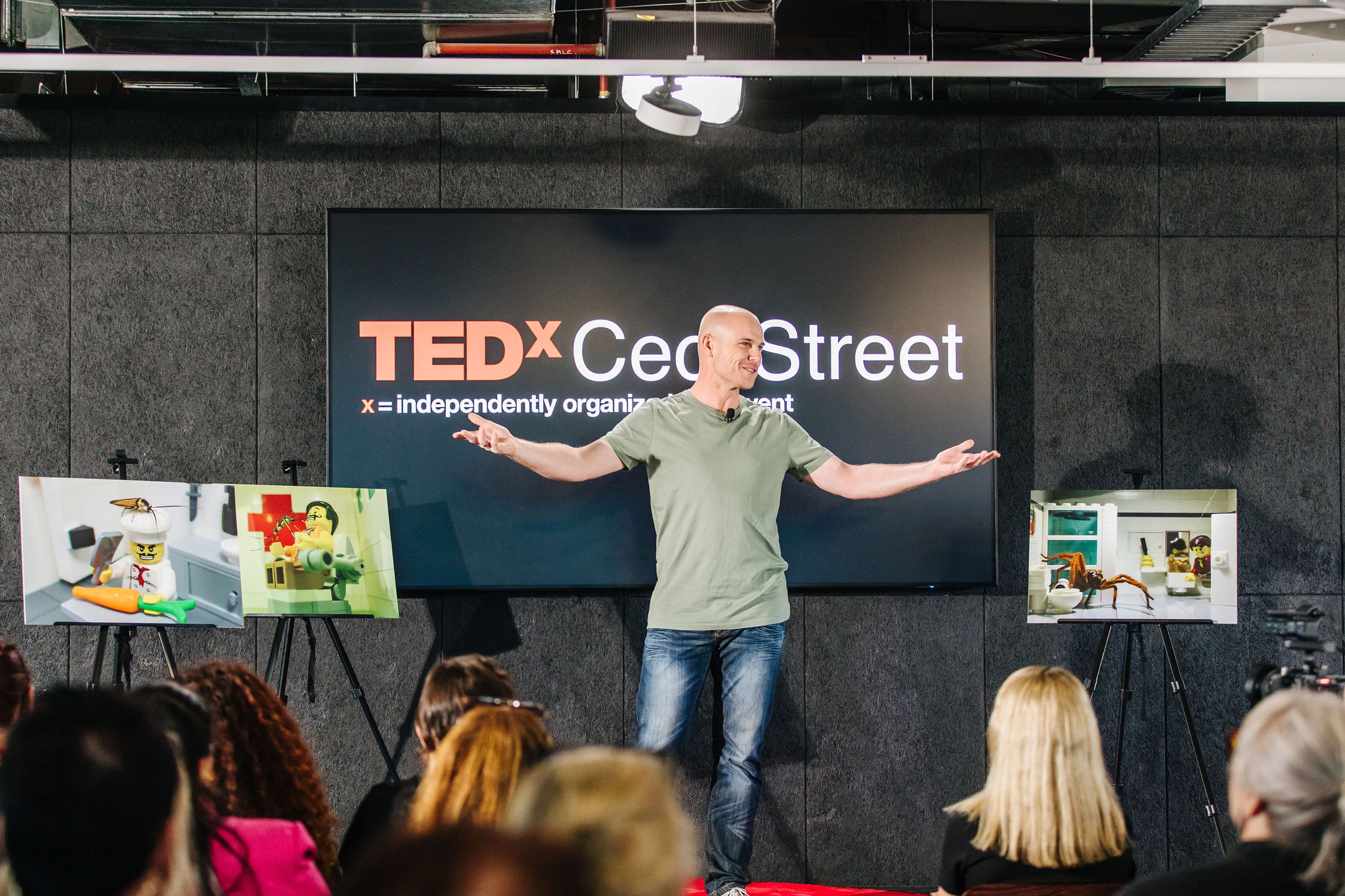
Steven Gill
Steven Gill is an environmental educator, science communicator, Far North Queensland reef and rainforest guide, and founder of Gone Buggo. His work brings together education, entertainment, art, philosophy, and conservation in a way that is anything but standard.
Show Notes
“The best education does not just give people information. It gives them something to feel, question, and remember.”
In Part 2 of this conversation with Steven Gill, we get into the work itself.
We talk about science communication, storytelling, conservation, and why immersive education hits differently when people are invited to feel part of what they are learning. Steven shares how Gone Buggo grew from the way his mind naturally works, pulling together disconnected pieces and weaving them into something meaningful, memorable, and deeply human.
This part of the chat explores what happens when education stops trying to be flat, proper, and easy to package, and starts becoming alive. We talk about citizen science, environmental advocacy, experiential learning, and why curiosity is often the thing that opens the door to real connection and lasting understanding.
Highlights:
- Why storytelling is central to how Steven teaches and communicates
- The role of curiosity in science, conservation, and learning
- How immersive and hands-on experiences help learning stick
- Gone Buggo and the challenge of building something too unique for the mainstream
- Why meaningful education should connect information with emotion and experience
What I loved about this part of the conversation is that it reminds us education does not have to be rigid to be effective. In fact, some of the most powerful learning happens when people are invited in through story, wonder, humour, and real-world connection.
If you care about conservation, neurodivergence, learning, or creating experiences that actually stay with people, this conversation has so much in it.
🔗 LINKS
Website: https://shantellepoynter.com
Instagram: https://www.instagram.com/shantellepoynter/
Guest bio
Steven Gill is an environmental educator, science communicator, Far North Queensland reef and rainforest guide, and founder of Gone Buggo. His work brings together education, entertainment, art, philosophy, and conservation in a way that is anything but standard.
Connect with Steven:
LinkedIn → https://www.linkedin.com/in/steven-gill-9223422aa/
Instagram → https://www.instagram.com/gone_buggo/
Website → https://www.gonebuggo.com/
Email - steven_gill@live.com.au
Transcript
SHANTELLE (00:01):
This podcast wasn't born in a studio. It was built in the wild moments of real life, the messy and the beautiful ones. School drop-offs, cold coffee, and whispered pep talks to myself that maybe just maybe there's more to life than only surviving. I'm Chantel, nurse, neurodivergent woman, solo mum, and your platform Glitter Crocwearing Healthcare Hype Girl. I'm driven by one purpose. To show the world that different doesn't mean less because everyone is different, just like you. The more we talk about being considerate of all humans, not just in response to a diagnosis, the more it becomes part of everyday life. So welcome to Different Like You, where we have real considered conversations about inclusion, kindness, and what it means to be fully human. If someone here resonates, share it with a friend because these conversations change the world. One listener at a time. Let's get into it.
I always find it interesting when I have these conversations with parents because they will say the same thing. I don't understand. They're so clever and they really do enjoy maths, but they're just terrible at it at school. And I will say to them, "You really like whatever it might be. Would you like to sit in a eight-hour workshop where you can have three breaks? That is it. " And someone will talk at you about it all day, then you fill in a sheet, then they're going to tell you what you're good at and what you weren't. The stuff that you weren't good at, they're not going to go back over and say, "Okay, cool. Come on in. Let's learn about this in a way that is relevant to you. We're just going to tell you that you're a bit shit and we're moving on to the next thing.
So good luck with that. " I think it's a perspective that they don't ever hear. It's just that the way the teacher's delivering it or the way our curriculum delivers it or the way that school does it is gospel. And if they can't learn it like that, then they must be terrible. And I was tearing up before when you were saying that you ... I'm going to tear up again. I didn't expect to cry today. Don't apologize. I guess they're tears of ... They are sadness, but I understand why, and that's why I'm so passionate about doing what I'm doing. I'm so grateful for people like you coming on the podcast because would a teacher ... How would a person feel if I gave them my report card? I was four years old when I was in prep, four. And my teacher said, "Chantel refuses to comply with instructions."
STEVEN (02:36):
That's so bad.
SHANTELLE (02:37):
Can you imagine standing in front of a four-year-old child and saying that to them? You
STEVEN (02:44):
Wouldn't get this into, obviously.
SHANTELLE (02:46):
Right. But you had a similar experience and you grew up believing these things that these people had told us. And I just am so driven to help all kids understand that they are so valuable and that they're not meant to know stuff yet and that there's so many different ways of learning. And I feel like when we make considerations for all people and not an adjustment in response to a diagnosis, everyone benefits. Every kid will benefit from jumping around on a wobble chair because, I don't know, maybe they ran out of their normal breakfast and they're five and they're annoyed about it. They're allowed. They don't need to have a diagnosis to be annoyed and need a wobble chair. I struggled for such a long time with my own children in schooling and a lot of people's ... And then we're built to make judgments as individuals, as humans, but I feel like we can either share our opinion and know whether it's helpful or not.
I feel like that's where we have an option. And when we're educated, we maybe have more information to ask questions. So I feel like when I've been on the receiving end of people saying, "Well, what do you mean you take them out of school when you do a roadshow? And aren't you worried that they're not going to learn? And how do you address all of these things?" And when I give them the information about how we operate and how we do things differently, I think they're equal parts shocked and excited. And I think, how have we grown up in a world where you are so surprised that I am a nurse and I have a podcast and I'm a mUm that's shocking to people that I wear these hats. Are you on the kind of receiving end of that as well with five jobs and a few different things that you loved doing thrown in or?
STEVEN (04:38):
Yes, sort of. I mean, the longer experiences, the multi-day tours with kids, but also with the full day rainforest tours, I jump out the gate from the first moment. Normally, we start the school things normally with some sort of a presentation. So before they know who I am, I'm shouting at them and throwing facts at them and trying to engage them, but also try and be serious because I need them to understand safety stuff. With the rainforest tours, half the time I forget my name, I forget who I am. I just start talking. And so it's normally somewhere in the middle of an experience where people get a chance to go, "Hang on, who are you and how do you know so much?" And so we do it backwards because then it's funny, mainly on the rainforest tours, you'll get people be like, "So what have you studied?
You must be a scientist. What have you studied?" I even jokingly address it early on in the piece. I say, "There's no qualifications required for a tour guide in the Daintree. You just have to be legally able to drive the bus with passengers. That's it. " So there's no education. Every guide does their own thing. And then later on, I joke about how most people wouldn't seek out more information if they had free time to themselves and you'd have to be some sort of lonely, pathetic loser to sit on the toilet and read scientific papers. And then I say, "So I was on the toilet last night reading a scientific paper and you'd never believe this. " And I give them the information, but then later on they're like, "So what is your degree?" I said, I don't have one. They say, "Well, where did you learn all this?
" I say, "Well, on the toilet mostly." And then they have to go back and be like, "Well, what do you mean? How do you know these things? How do you have this information? How can you be such an eloquent, clear communicator with all of this scientific literacy and not have spent four years in university or done a doctorate?" And the answer generally, nowadays, I just brush it aside and say, "Oh, it just comes with the chism," and walk away. And leave them to deal with it because autism doesn't look like this, autism people can't function in society. How can you possibly be smart and autistic? I'm like, "You need to reassess it.
SHANTELLE (06:50):
" You need to educate yourself. Yeah, right? Have you started to realize that it is definitely more about what they know and don't know and who they are versus you needing to educate them?
STEVEN (07:03):
Yeah.
SHANTELLE (07:04):
Yeah.
STEVEN (07:04):
So I don't apologize anymore. I earn people's respect just from-
SHANTELLE (07:10):
Who you are. Yeah. And
STEVEN (07:11):
When they try and understand the foundations of that respect, they find out there isn't really any. I am a snowball of information that's been rolling downhill for a long time and just comes out clearly because I spent my entire childhood masking so the teacher wouldn't kick me out the room.
SHANTELLE (07:30):
So exhausting. Hey.
SHANTELLE (07:33):
What do you do differently now? I mean, I know you said you really just lead into exactly who you are and I joke with my kids all the time. I was like, "Research as hard as you like, but just know that you could end up accidentally sitting in university and then two years later have a degree." Mine was an accidental degree because I was just so bloody curious and just loved them. And I was like, "Well, how can I get this information?" And there I was sitting at university and thinking there was teachers that legitimately said to me, "I have no idea what you're going to do with your life." And I was sitting at uni like- Do they know that I'm here? Should I tell them? I got into uni and I was like 39 and I was still thinking, and now I really do lean into it.
But I've done a lot differently in order to be able to do that in my personal life. Do you do things differently to help you just lean into exactly who you are than maybe you did 10 years ago or 20 years ago?
STEVEN (08:33):
Not consciously. No, I can't think of anything that I would point to. I guess I've sort of cultivated more space for myself to be who I am. My wife is AuDHD, my daughter's AuDHD. So we're all in our own little bubble. There's no one in the house I have to fake it for anymore. I did spend some years younger in life trying to force myself to play a character in relationships that I thought I wanted and gave up everything I was and everything I wanted to be so that I could pretend to be the right guy for someone else. And I'm very glad that I got away from those circumstances. But I mean, for a long time, I've just ended up in positions where my strengths played out. I spent years in hospitality management and restaurant management, which is all either educating your own staff, which is, I like education, I'm good at education, I'm good at making people learn and make them retain information, or being the person the customer needs to see as the manager and a lifetime of masking pays off.
I didn't enjoy being a manager, but I was good at it. I could walk into a difficult conversation with a customer and placate them just by putting on the face they needed to see, but I could also teach my staff in a way that they would retain and have lots of great relationships still with people that worked for me in the past. And yeah, I accidentally found out that I could do tourism. I fell into a tourist job some 12 years ago and realized that all of my time spent learning, talking, linking things into stories and masking so that the people in front of me thought I was good works really, really well when you've got to upload to people. I just tell them stories in a way I know they're going to like. It's just masking for a paycheck now. So yeah, I don't-
SHANTELLE (10:29):
Do you feel as though your ADHD has made me really come out and then landed you in spots like an accidental tourism job and you're like, hang on, how did I get here? Because if I thought too hard about this, it wouldn't have happened, but my ADHD was having a great day and here we are.
STEVEN (10:48):
Yes.
I have me too. The chaos so many times, too many times. And it does make it really hard, especially like I say, when people want me to validate myself after I've earned their respect. And it's very hard to tell my stories with any sense of, I guess dignity is the wrong word, but it's the first one that comes to mind. I had a kid really, really respected me, was loving everything I was doing. And he said, "How did you get a TED Talk?" And I just said, "Oh, I just sent them a bunch of emails and eventually they took me in. " Oh, I didn't apply for it. I don't even know how you get a TED Talk. I just managed to happen one. Yeah. Yeah. I just
SHANTELLE (11:28):
Had
STEVEN (11:28):
To go- You
SHANTELLE (11:29):
Just did it.
But shoot your shot, use your free will, send the emails. Someone will either listen to you or they won't or they'll reply with something else and jellyfish. See, this is where that's exactly what's happened. And here I am. I feel like sometimes ADHDs or neurodivergent people are like, "Oh, it was just an accident or it just happened, but other people have so much admiration for that, either bravery, courage, but it's not conscious a lot of the time." Or if it is, there's no planning element to it for me. I'm like, "Oh, well no, I just sent them an email and now we're meeting with them in Sydney and we're doing all this cool stuff." And I'm like, "Is this even my life?" I just sent an email. Do you feel like that as well?
STEVEN (12:23):
Yeah. Just did a thing. I just did a thing. I did it. Why not? But it's been really good, especially with the school kids to be able to sort of crystallize that and try and turn it into advice, I guess. I have these young kids that are in the midst of that school situation, which I remember badly, you remember badly, these kids that I see all this potential in, the teachers are like, "Oh, that one, not so big a fan of that one." But I can tell that they're great. They're just not great in a classroom and they're the ones that are like, "How do I get to be you? How do I get to be who you are? " And I've just sort of had the opportunity then to kind of condense it and crystallize it. And it turns out it's a really simple answer, which is that all the great entrepreneurs, all the great inventors, all the greats really, if you go back through history, anyone who ever did anything amazing just wasn't scared of it not working.
SHANTELLE (13:21):
They showed up.
STEVEN (13:22):
100 shots and one hits and that's the one you get famous for. Nobody talks about your 99 failures.
SHANTELLE (13:28):
And nobody cares about those. They're embarrassed. They're like, "What? We're not going to talk about those." I just kept showing up and I say to my kids and to everybody in my circle, showing up is the hardest thing to do until you do it. And then everything else from there, that is where your opportunity is made. And whether that be showing up online or showing up by starting a podcast or taking photos of Lego, having a chat to Katie Perry, or whatever it might be, that's the hardest part until you do it. And then it's not the hardest part, but that is where it all starts. And through everything I've done, I've kind of had a mantra. I don't know if you have something that you try to kind of live by, but mine is to be kind, be curious and be open to learning.
Because I feel like if we lead with kindness always, when you go into a classroom of kids and the teachers are like, I'm like, "That's cool. I'll just be kind. If they're jumping around, I'm just to be kind, whatever it is, come on, show me what you got. What are we doing here?" Or if it's in nursing and they're like, "Oh, this patient," I'm like, "Give them to me, put them on my allocation. I'm in. I'm here for it. " And then we're curious what's going on for you and then open to learning. And I think a lot of the time that means to shut up and listen and that's not what they want to do or what they feel like they're meant to do. It's always, "Well, I'm here to deliver this. This is the outcome that we need. This is what I need to have done today." And that then puts the pressure on.
Whereas I feel like if we be kind, be curious and be open to learning about a situation, then we get a lot further in the experience. Is there anything that you kind of take with you through your day or you talk about with your wife and your daughter of, this is kind of how we operate or we just have a go or we just show up or ...
STEVEN (15:16):
Your mantra is great. I mean, I resonate with all of it. I don't have any words that I repeat to myself specifically. For me, I just want to make the world a better place. And what that looks like changes from day to day as the world changes. I'm just trying to help people live better within themselves, live better within their world. And it comes from curiosity and it comes from listening, but it also comes from sharing stories that aren't being shared elsewhere, which is, especially with the invertebrate communication and talking about these smaller forms of life with gone bugo. It's trying to champion four things that just nobody gets to listen from their side, but it's just about trying to make the world a better place. When you see the bigger picture and you see all these things locked in together and you realize that something as simple as hating cockroaches could cause us to poison everything in our environment, meaning that we can't grow food to keep ourselves alive.
And you can just go, "Hey, well, hang on. Let's just reconsider why we hate cockroaches."
SHANTELLE (16:19):
Well, let's talk about these guys. We don't have to hate them. Let's understand them.
STEVEN (16:26):
Yeah. That's the whole thing. Cockroaches are in every talk I do now, cockroaches and termites and why we have this hatred, but what that hatred does to us in return, the comic- Do you
SHANTELLE (16:38):
Feel like it's hate or fear?
STEVEN (16:40):
I think the two things are very closely related. Fear comes from ignorance. Hate comes from ignorance. It's very hard to hate or fear something if you understand what it is, why it is what it's doing and what that means to it as well as to you. I don't necessarily know that they're that far apart. I think sometimes they carry their own baggage, but hate and fear when it comes to things like invertebrate is really, I guess the distinction is whether or not you go, ugh, or whether or not you squash it. Hatred puts you away from it and fear makes you, I don't know, hatred makes you kill it, fear makes you move away from it.
SHANTELLE (17:19):
And I asked the question, I think you've made some really interesting connections there because I remember as a kid, I was a sea scout. So we were out adventuring every weekend, land, sea, bush, snow, whatever. We were doing it. And I remember we had environmental reptile people come and I would hold the snakes. I remember doing that. As an adult, I don't know when the turning point was, but I developed this irrational fear of snakes to the point where I would think about it and start just keep crying. And I'd be like, "What is going on with my eyeballs? They're sweating and I'm not sure what is happening here. And I just know I'm really scared. Can somebody help me out? " And I couldn't explain it. And I had this information that I knew I'd held them before, like, "What is going on? " I feel like, because I still struggle with walking into the reptile house at the zoo.
I don't need to go in the tunnel. I don't need to go in the room like I can see them. But when we camp, we're outdoors a lot, we camp, we go bush, we hang out in the long grass, I'm aware that they will be around, but I'm not fearful and I feel like it's the environment that I'm in. I know that's where they're meant to be. If I'm in the bush, I'm in there, of course they're going to be around. If I'm in my backyard, I know it's outside, but I'm not expecting a snake there, equally in my house. So when they're in the right place, I'm not scared, but when they're not in the right place, then I want them not there anymore. With the cockroaches, the system in our house has always been, and I taught my son, I very vividly remember he was about two and a half and we saw a cockroach running.
We've got the big bush ones when we were living on the Gold Coast or just huge. And I think it's unfair that they can fly and run so fast. That's all. I think it's unfair
STEVEN (19:20):
Things, don't
SHANTELLE (19:21):
They? Yes, they do. And they don't ever just fly near you. They fly straight at you as well. The good GPS, wings and fast feet is like a triple threat that nobody deserves. So I taught him because I was like, "They deserve to live just like us, just not in here." So I would teach my son to put a bowl over the top of them. And then when we're feeling brave enough, we would deal with that. But for the time while we were building up the courage, that's how we dealt with it. And I'm so okay with the inside, which is why I kind of ask, "Do you think it is fear or hatred for most people? " Because until I knew that, until I'd really unpacked and sat and thought and was curious about, "Okay, why am I scared of this now? And I never was in this environment.
I'm scared, but in that I'm not. " I was then able to understand. And I did read a lot of research because your girl is a nerd and I love it and show me the science and I will read about it. And then I started learning what was going on and I thought it was so cool. And if there's anything that I can try and pass on to my kids through that experience is understand why you're scared.
STEVEN (20:31):
Questioning why with everything, not just fear, but with everything. And I think the big turning point in my life was drugs in my 20s. I experimented with a few psychedelics and it just made me question why, why everything? Why do I eat that? Why don't I eat this? Why do I like that? Why don't I like this? And I kind of just started poking around in the whys of everything. And now, I mean, I haven't done drugs in years and years and years, but every time I come up against something, why? Yeah. Why? Where did it start? What does it come from? What does it benefit? Who does it benefit? Is it actually helpful at all or is it just deeply entrenched and unquestioned? Yes. Yeah. A lot of fear and hatred is just stuff that is in there and nobody asks why.
SHANTELLE (21:19):
Yeah. Yeah. And that's the thing I try and say to my kids, if you're in a situation and you're frustrated or you're at school and someone's doing something, a teacher, a student, it doesn't matter for your own sanity. Be kind to yourself and to the situation and then be curious. Ask the why. Don't give a finite yes or no, you don't have to. It doesn't matter how old that person is. It doesn't matter what role they hold. Authority doesn't determine respect and vice versa. So it's interesting you mentioned the psychedelic element of that because there's so much research happening in that space for people with chronic depression. And I feel like when you've lived 12 years, and I referenced 12 years, it's our schooling life thinking that you're terrible at everything. How do you undo that? How do you then get to a place where you're like, "Oh no, the world's a cool place," instead of being absolutely petrified of everything in it and thinking that you're just shit and terrible at everything because that is exactly ... And it wasn't until I then lived another 15, 20 years after that.
I was 35 or 36 when I got my diagnosis. Were you diagnosed as a child?
STEVEN (22:30):
As far as I understand, so I haven't had any mature diagnoses, any real clarity. I understand myself as AUDHD just because it fits. When I was diagnosed as a kid, the diagnosis I've been told about by my parents was gifted. I was just diagnosed as gifted. I mean, they didn't have AuDHD back then as far as I knew. There was really autistic and there was really ADHD if you were lucky. Well, ADD back then, they didn't have
SHANTELLE (22:55):
All the- Yes, there was no H. They added that on later. That was the second edition, version two.
STEVEN (23:00):
In public schools separated, we didn't have the means to do that. So I was put into public school knowing that it wouldn't work for me because I was gifted. And for 12 years, mom was just like, "Yeah, well, you're gifted, so that's how it's going to be. " Okay, cool.
SHANTELLE (23:18):
Do you talk to your mUm a lot about that time of your life now? No.
STEVEN (23:23):
I mean, we don't talk that much, partly because we're not a talky family. And I think, again, that sort of comes from who we are, where we sit in things. I mean, obviously apples don't fall far from trees. I'd imagine my mom's somewhere on the spectrum specifically. She doesn't believe it and we don't talk about that. The kids came out weird and nobody knows why.
SHANTELLE (23:45):
Crazy, hey. And they think, or no, that's totally normal. Everybody in our family does that. And I go, "Yeah, I know because the genetic link is so strong, but sure. Yep, totally. Yep. I understand."
STEVEN (23:59):
Because of my journeys with environmentalism and conservation and nature, I have accidentally driven a rift between us as well because I talk a lot about how I grew up unaware of the environment, unaware of how important nature was, which is not a blame thing for me. It's I'm aware that when I was a kid, we didn't have the same science, we didn't have the same facts, we didn't have the same statistics, we didn't have the same understanding, we didn't have the same communication systems. There was no way my parents could have known what I know about nature today. But my journey with Gone Bugo and everything that I do is now built around the idea of breaking generational ignorance, which is not an attack or an accusation. It's simply that I think assuming everything you learned from your parents is correct because they're your parents is probably a flawed way to continue moving forward in a world where science continues to develop.
SHANTELLE (25:02):
Very interesting, isn't it? That that
STEVEN (25:04):
Took offense to that.
SHANTELLE (25:05):
Yeah. Look, I can appreciate that. And I quite often, I might say something on the podcast or write something and I think it never stops me from doing it and saying it because that is exactly why I have this podcast. It's everybody's different. Just like you, we need to talk about the hard things because I grew up not knowing that when we know different, we can do different. If they didn't know different then I can't change that, but I know different now and I never want ... I can't be everything to everybody and I don't try to be, but I try to be something to the people that make an effort or that are trying. If someone wants to learn more about neurodivergence, if someone wants to learn more about how my nursing path came about, or I finished year 12, but then I buggered off overseas and did all these other things.
And how did I then get to be a nurse? I'm so willing and prepared to share the story because it is not a traditional path. And when I received my diagnosis, it wasn't a surprise with the information that I had collected, but there was so much grief for what my life might have been like had I had that information. Again, not a blame because they did the best they could at the time with what they had and what was available to them. But I can't help but think when I do say something or I do something that they would feel like it is blame, but I also can't control that. I'm just telling my story and my perspective, which only I can tell and nobody else can tell me what that story looks like.
STEVEN (26:36):
But it's also part of listening and listening openly. I think like the first show that I toured with Gon Bugo was called Let Me Explain. And it still is as far as I'm concerned, my Magnum Opus. My TED Talk, I was really frustrated to have to shoehorn everything into 15 minutes. So let me explain is what I wanted to say in my TED Talk, but couldn't. And so I wrote it as a two hour long show, performed it as an hour and a half long show. And both my mother and my father sat through the show and neither of them talked about it afterward. We've just never addressed it. I know that I had a chance to say some of what I feel and some of what I thought about my childhood and some of what I've changed as I'm growing up and neither my mother nor my father want to unact that at all.
And I think especially with mum, because there was, I think she took great offense to some of it. Instead of wanting to hear my side, she just took offense, shut down, and that's the end of the conversation.
SHANTELLE (27:38):
To how it made you feel. Not what you could see, not what you experienced from your perspective, but maybe how it made you feel that she was responsible for that as a parent maybe.
STEVEN (27:47):
And I never meant for that to happen. I don't blame my parents, people doing the best we can with the best we know at the time. But I think because they don't want to talk about it, I can't explain that to them either without starting an unprovoked conversation. "Hey, you know how you never addressed that show idea? "You go, " I just wanted to tell you, I love you. Yeah, I don't know how to bring it up.
SHANTELLE (28:09):
"Yeah. And there's a piece in your life as well. I think for me that I'm protective of, I love my life, I love what I'm doing. I feel so privileged that I get to do it every day. It still blows my mind that some of these things are a job. I often say," If I knew that my bills would be paid, I would nurse for free. I just love it so much. I would do research for free. I just love reading. I love sharing it. I love knowing about it. I just want to protect that. I don't want to have the rift if it doesn't need to be there. I'm like, what is the value? "But equally, I appreciate from both sides where that could be tricky. I am acutely aware as a solo parent for my kids that ... And I have these conversations with them for that very reason.
I will say to them," My capacity as a parent is limited because I have one brain two hands and there's two little people that I'm in charge of. So I'm aware that my limited capacity impacts you guys. So what I need you guys to do is tell me when you think that's happening because I might have an idea in my head of how it might impact you, but the way it's impacting you, I might not have thought of. And a great example was my daughter said, "Well, I didn't think I could apply for a job because how can you drive me there and pick me up if you're the only one who drives and picks me up and how will you do that if you're working?" And she'd had this entire concept and plan and sorted it all out in her own head and come to the conclusion that it means she can't have a job.
And I was like, "Girlfriend, we need to talk about this. They are all mum worries. There are things that we talk about and we've solved it. " And now she's got two jobs because she's one of us. That's how that works. Polymathic. Yeah. Well, it's not interesting enough. And why should you give your everything To one thing, if you care about lots of things. It's become a lot more mainstream now talking about the polymathic mind and the Renaissance man and things like that. I think that is the privilege of the internet. Though often I feel like we're more connected than ever, but disconnected and isolated than ever. But I'm so grateful that those are things that come out of it because I can give the kids social proof. I'm like, these are things people are talking about. And they're like, "Ah, so you don't have to be ... " And I've said this to them for years, but you can be a nurse, but that not be your whole job.
Your everything that you do. You can be a nurse and a painter and a whatever, or you could be a builder and a poet and all sorts of things. Do you feel like there's been a lot of benefit in kind of validating things that we do as ADHD is or ADHD is now that there's more social proof?
STEVEN (31:00):
The world is ... Yeah. It's a lot of benefit, but not enough yet at the same time. You just said about you would nurse for free if your bills were covered. It's a shame that the capitalist system has forced people to have to do things they don't love because that's the only way to get by. When I personally believe that most of humanity would bend over backwards to make life better for everyone if they didn't have to think about where the next meal came from. It's a shame that we are so torn between these two things. We're at a point now where we do know better what we should need to do and what we shouldn't need to do and what we could possibly contribute. And I especially think with conservation and environmentalism, there are so many compromises made simply because it's affordable and it's what needs to happen for the life to stay on.
People don't want to donate to charity, which wouldn't be necessary if people just supported other people anyway. And there are people who would willingly give all of their time to make the world a better place if they were busy hating their job.
SHANTELLE (32:15):
Right. I was in HR and across a lot of different industries, and I say to my daughter's friends, they're 15, they're getting that whole, "Well, what are you going to do with your life conversations through school and career?" It's funny when her friends come over because I feel like she rage baits me. She will say, "Hey mom, so at school they were saying that it's really important that we pick our classes based on what we want to do at university and I rub a neck to ... Pardon?" And all her friends are there and then she knows that the spiel will come out in a really productive way. But I will always say to people, and I say this in keynotes and just speaking, and if I'm at dinner with a friend and the waitress hates their life, and you can tell. And I will say, "If you're on a different job, I'll help you.
" Don't be anywhere hating your job. And if you don't know how, I will help you because I don't want you hating your job. It's not good for you. It's not good for the business. It's not good for your family. It's not good for your health. I will help you. I just agree with you. We've removed the human element from everything that we do. We have lost ... I feel like as a system, we prioritize an outcome and what people can provide us versus the human and the value of the person behind what they're doing. And I just find it really sad and we need to do things different.
I'm curious to hear about that, but I'm also really wanting to put the amazing stories out there of the people that are doing things so differently. I have joined the iNaturalist app with my kids and I was so excited. I didn't realize that we'd been moonlighting as citizen scientists every trip that we had done. And I cannot wait to update my bio with that because I love that. I think people think you have to be a marine biologist or to get ... No, you don't. You just need to be curious and you can be a citizen scientist. It's really cool. And we've had some great deep dives into fungus and all sorts of cool stuff that's turned up in our backyard. If there was something from a conservation or environmental element that you would encourage families or kids to do or you want parents to know or you want people to know, what would it be, do you think?
STEVEN (34:37):
Be more curious straight off the bat. And that's really sort of what Gone Buggo is all about is just showing people things that they might not look at and just poking them a little bit. "Hey, have you heard this? Have you thought about this? "Because I mean, I know for you and me, it comes really naturally. And I do think, I mean now, thankfully the world has pivoted to this point where social media, for all of its ills, gives people like us an outlet to share our passion and share this stuff. But I find that it doesn't matter who I'm talking to. When I talk about how interesting bugs are or how fascinating this lizard is or how incredible that fish is, everyone from every background goes," Oh, wow, I never knew. "And I think a lot of that just stems from the fact that in school fish are fish and plants are plants and mushrooms and masham, and we're not going any further into it.
And having that curiosity squashed,
It takes the light out of life. It makes you realize or makes you believe, not realize because I don't think it's true. It makes you believe that there is no further need to investigate. And so yeah, iNaturalist is amazing because even though it starts with a, " I wonder what that is. I wonder what that's called. I wonder where that lives. "But iNaturalist just becomes this simple free portal to finding out how rare it is or how common it is or what it's a pest for. It all just stems from that curiosity. Just never assume that because a word pops up in your head when you look at a thing, you know everything about that thing. And as you said at the start, that's what science is all about. We now know that plants talk to each other through mushrooms in the ground, but I've met adults still today.
And I mean, Suzanne Samad's work goes back to 1997. I made up the word mycorise in 1885 and I meet people my age who go, " Never heard of that before. "And it's not-
SHANTELLE (36:35):
And it must not be true. That's the other thing. They go, " Never heard of it. It's not a thing. "And you're like, " No. "That's
STEVEN (36:41):
It. Nobody
SHANTELLE (36:42):
Told me. Oh gosh.
STEVEN (36:47):
Just that open-mindedness to go, " Well, maybe I don't know. Maybe I don't know everything about this. What else can I learn?
SHANTELLE (36:54):
"Curiosity.
And tell me your experience. You might know through my jellyfish journey, I think I'm going to learn a little bit more than your average Joe or what we get told briefly on the reef. No one is gifted with knowing everything, but we have the gift to ask and learn. And I feel like that is also the privilege of the internet now, that we're gifted with that. So asking people, there will still be somebody that says something about a jellyfish and I will have so much value from saying to them," What was your experience with it? "I feel like we never get to a point where we should know the most of it all and stop wanting to know more. I have said, I know that a lot of people aren't expecting this when I have done talks at different things. And I will say to them," If you believe that you are the expert in this in the room, the door is over there because I have nothing to share with you.
You will learn nothing today and you're not the person that I'm talking to. "And it's very interesting to see other people in the room kind of look at one particular person or that maybe has been in the organization for a very long time or that I know the most here, so we're good. But it's also really interesting when people will say afterwards," Why do you say that? And what's your experience been? Have people left? "I say," Yeah, absolutely.
STEVEN (38:13):
"It's hilarious. Being arrogant enough to stand up and walk out, that's so bad.
SHANTELLE (38:18):
Right? And everything that's wrong with the world. I appreciate that it's 3:04 and I am taking up more of your time than we allocated, but I would really- Have a great time. Me too. And I would really love to chat to you again. There's so many domains that I've captured. I'm like, " I want to talk more about childhood journey of how you felt different. And I want to talk about the way we can do things different in science and maybe
STEVEN (38:43):
That- With what on the podcast?
SHANTELLE (38:44):
Yeah, mate. Come on in, find your tribe and love them hard. I'm a massive believer in that. And when you find them, it just happens. But I'd just love to stay connected through the science element too. Are you in Brisbane or where are your next shows coming at and in and around, or where can we find that information?
STEVEN (39:04):
At the moment, I am shopping a show out. At this stage, I'll be driving back down the coast in the September, October school holidays. So I haven't booked all venues. The only show that is confirmed and locked in at this stage is in Lake Macquarie on the 7th of October, but I'll be driving basically through the two weeks of the Queensland school holidays. I'll be driving through Queensland down into New South Wales and I'm offering the show through councils down the hallway. So hopefully I'll be performing either in Brisbane or somewhere nearby because there's so much going on in that area and that's home
Contacted Toowomba. I've contacted Ipswich. I've contacted the Sunshine Coast. I've contacted Brisbane. So yeah, I'll hopefully be performing a show near you in September. I
SHANTELLE (39:51):
Have some great connections in council in different kind of local government areas. So I'd be really happy to, if you've got something you can send me, to send it on to them and kind of do maybe an e-introduction. And I hate that word, but it's the only way, like, I don't know, email intro. What do we say? But I don't know what else to say. So then I say it and I fringe and then I apologize. But kind of do that intro and say, you need this here because it works. There's a couple of schools that one particular I know is a flexi school that would just love to have you have you there. So if you've got some availability and some information, that'd be great. But when you are here, I'd love to catch up with you in person if that's an option. And we can do something really cool.
I've got a gajillion ideas as our brains do that are coming flooding in. I'm going to need a nap after this for the very best reason. But I would love to do that. I think we are actually heading up your way, maybe July, August,
And would love to just kind of know where you are around if you're doing rain, forest tours, reef tours, what you've got going on and how we can get involved in it because it's just so up our alley and the way that we do stuff. So it'd be really cool because the Scrub Hub roadshow is backing the nurses, backing the nation. So I support student nurses, anybody that works in healthcare because working in healthcare is wild and we-
STEVEN (41:15):
Underpaid, overworked, undervalued, and so critical to so many people. I love what you do.
SHANTELLE (41:21):
But the stuff that we see, I think it's so unique and the challenges that we face and the ones that people think of, it's the death and all of those things is what usually comes to people's mind, but there's so much more than that navigating a system that is not ... It's not very user friendly even when you are in it. We support the nurses, we support the students because they need all of the love. They're showing up for free. Some of them get paid, not all of them. And so we do a bit of a roadshow tour and we provide mental health outreach as well with our teams. So we're up that way and I'd love to stay in contact and come and be part of what you do. I know the kids would love it and yeah, it'd be an awesome way to kind of keep on doing and telling the cool stories that you tell.
STEVEN (42:11):
Absolutely. I'd love to be involved any and every way. I'm always opening new things. That's one of those ADHD traits, right?
SHANTELLE (42:18):
Me too. We can't say no. We're like, yes, we'll figure out a way to do this cool thing. We're in.
STEVEN (42:26):
That's actually, that's been a problem with the touring. Yeah. I actually agreed to some really terrible scheduling with the tour. The Let Me Explain tour, I was thinking at towns that were too far apart to get
SHANTELLE (42:37):
Together.
STEVEN (42:40):
I just booked-
SHANTELLE (42:41):
In my mind, I was just spawning myself there and it was fine. Yeah.
STEVEN (42:47):
We'll make it work. We'll
SHANTELLE (42:48):
Make it work. Yeah. I know that feeling. But send me your dates when you're around. I'll send you my dates and send me any packages or anything that you've got because I'd love to share it with some people down and around here and tell them to book you before you get booked out. And yeah, I'd love to have you on again and we can give some more topics, the differences that you felt. Yeah. How does that sound?
STEVEN (43:11):
That sounds amazing.
SHANTELLE (43:12):
Wonderful. Thank you so much. Have the very best rest of your week. And I truly feel privileged that you share your time and tell your story and listen to me natural ways.
STEVEN (43:24):
Not at all, Shantelle. It's been really, really great talking to you. Like I say, I'd happily keep doing it and I'll definitely come back.
SHANTELLE (43:30):
STEVEN (43:34):
Thanks, Shantelle, you too.
SHANTELLE (43:36):
See ya.
STEVEN (43:37):
See you.
SHANTELLE (43:37):
Thanks for hanging out with me on Different Like You Today. These conversations matter because when we take the time to have considered conversations, the world gets a little kinder and a lot more humans. I'm Chantel, your healthcare hype girl, reminding you to be kind, be curious and always be learning. If this resonated with you, share it with a friend because small actions create change to support everyone. After all, everyone's different, just like you. Until the next step, keep showing up exactly as you are.
Share with a friend